Returning to Egypt
You have done Giza, Karnak and the Valley. This is the rest of it.
Most of Egypt's visitors see the same eight places, and they are the eight places for good reason. But the country holds several thousand years and about ten times as many sites, and the ones that go unvisited are not lesser — they are simply further from the airport. If you have already stood in the hypostyle hall at Karnak, this is a different country and it is largely empty.
What changes
The itinerary stops being a checklist and becomes a subject. Second visits are usually organised around a thread — a dynasty, a material, a region, a question — rather than around the map. They also go slower and further: the sites are more spread out, the roads are longer, and the reward is standing in a painted hall with nobody else in it, which almost never happens at the headline sites.
What we would suggest
Specific rather than aspirational. Where something depends on a permission or a single boat, it says so — we would rather tell you now than after you have paid.
Abydos and Dendera
Two of the most complete temples in Egypt, both reachable from Luxor, both largely ignored. The Osireion at Abydos is the strangest structure in the country and the ceiling at Dendera — the astronomical zodiac, the colour still on it after two thousand years — is the single best-preserved painted surface most visitors never see.
The Fayoum
Ninety minutes from Cairo: a lake below sea level, the Valley of the Whales with its forty-million-year-old fossil skeletons in open desert, Greco-Roman mummy portraits that look uncannily like photographs, and pottery villages still working. It is the easiest genuinely unvisited day in Egypt.
Siwa
Ten hours from Cairo or a flight and a drive, hard against the Libyan border, and unlike anywhere else in the country — a Berber oasis with its own language, a mud-brick fortress town, salt lakes you float in, and the oracle Alexander crossed the desert to consult. It takes three days minimum and it is worth every one of them.
Middle Egypt
Beni Hasan, Tuna el-Gebel, Amarna. The rock tombs of the Middle Kingdom and the abandoned capital of the heretic pharaoh Akhenaten, in a stretch of the country almost nobody visits. The wall paintings at Beni Hasan — wrestlers, hunters, everyday life in 1900 BCE — are as good as anything in the Valley.
The one site you did not finish
Second visits often have an unfinished piece: the tomb that was closed, the museum wing you ran out of time for, the temple you saw at the wrong hour. Say what it was. Building the trip around going back properly to one place is a better plan than most itineraries we are asked for.
Worth knowing before you plan
- Allow more days than the map suggests. Abydos and Dendera together are a long day from Luxor; Middle Egypt and Siwa need overnights.
- The guide matters more on a second visit than a first. Ask us for someone with a specialism — Ptolemaic, Coptic, prehistory, the Amarna period — and we will match rather than allocate.
- Some sites in Middle Egypt require a police escort as routine procedure. It is arranged in advance, adds no cost, and changes nothing about the day beyond a vehicle in front of yours.
- Accommodation thins out quickly away from the Nile corridor. In the Fayoum and Siwa the best places are small and take few guests; book early or accept the second choice.
- October to March, without exception. Middle Egypt and the Western Desert in summer are not a matter of comfort but of feasibility.
Starting points
Private throughout, led by a licensed Egyptologist, rewritten around your dates and your party. Prices are per person and fall as the party grows.
The Grand Tour of Egypt
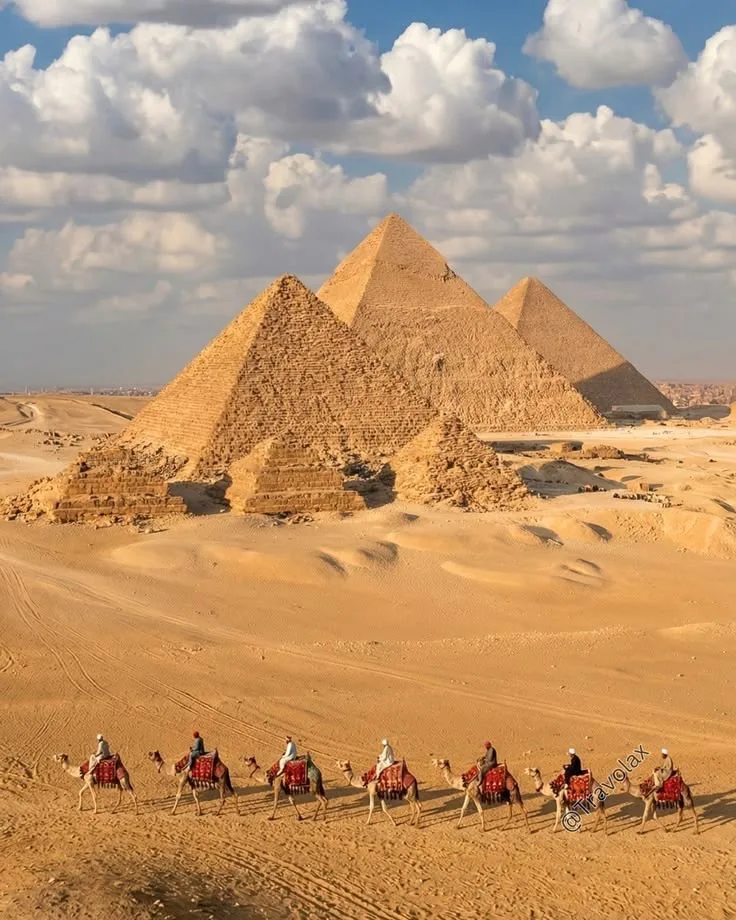
Our most complete journey: two capitals, a Nile cruise, Ramesses II's mountain temple at Abu Simbel, and four Red Sea days to absorb it all.
Egypt Icons & Nile Cruise
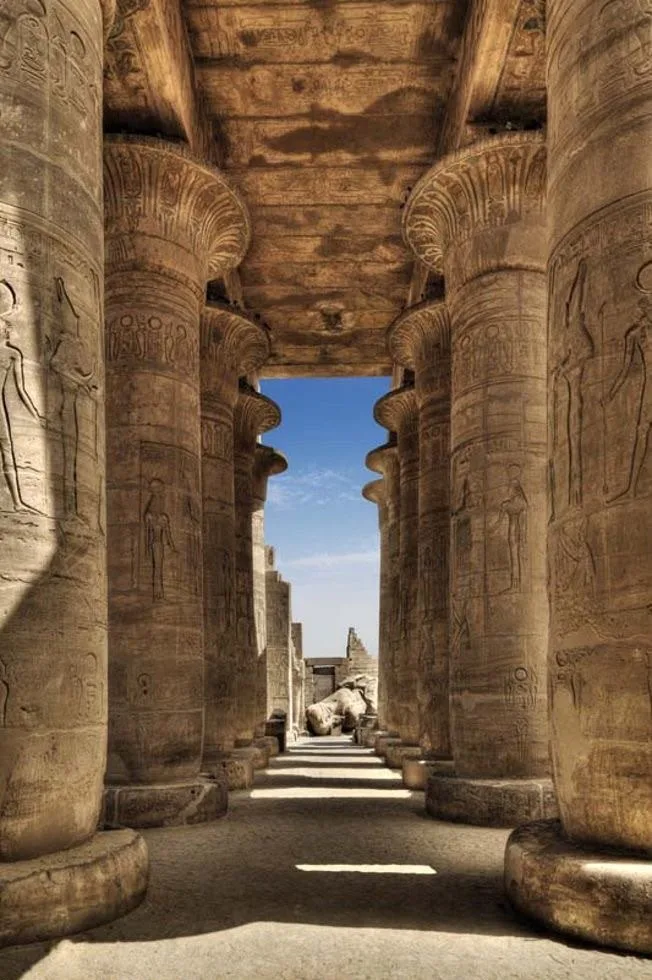
Our most complete journey: Cairo, Alexandria, a sleeper train south, and a three-night Nile cruise from Aswan to Luxor — every layer of Egypt in one arc.
Egypt Through the Lens
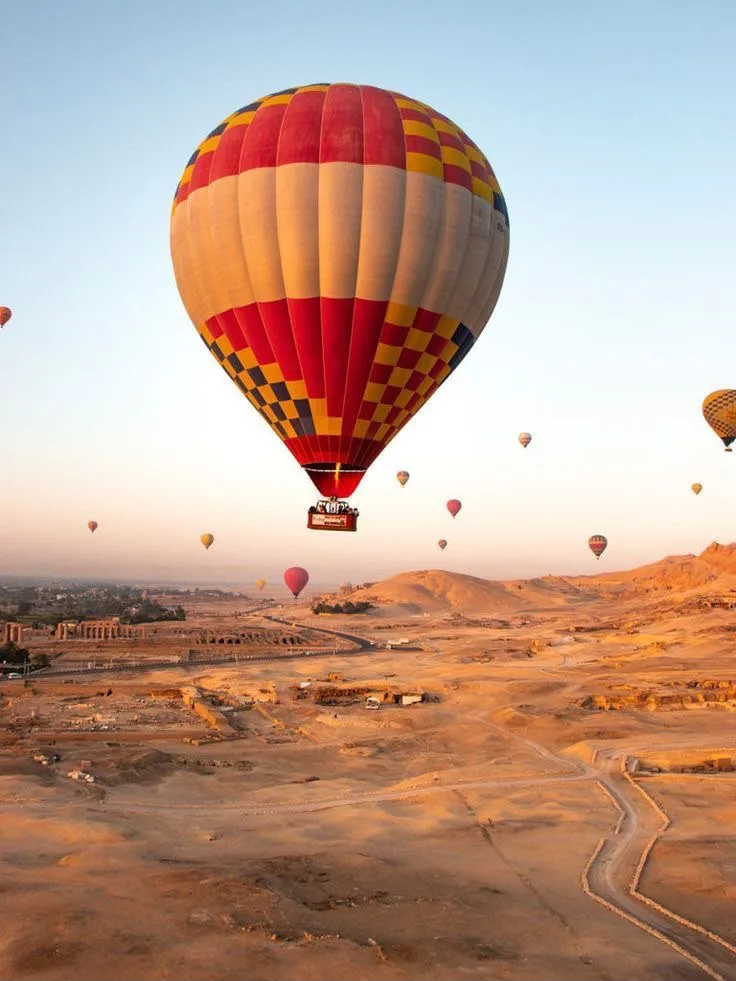
An itinerary built backwards from the light: early-access Giza at sunrise, Karnak before the crowds, balloons over Thebes and feluccas at golden hour.
A second visit — questions
What is there to see in Egypt beyond the Pyramids and Luxor?
A great deal, and most of it is empty. Abydos and Dendera north of Luxor are among the most complete temples in the country. The Fayoum, ninety minutes from Cairo, holds a fossil valley and Greco-Roman portraiture. Middle Egypt has Beni Hasan and Akhenaten's abandoned capital at Amarna. Siwa, on the Libyan border, is a Berber oasis unlike anywhere else in Egypt. None of these has a queue.
Is a second trip to Egypt worth it?
For the right traveller it is better than the first. The headline sites are extraordinary and also crowded; the second tier is nearly as extraordinary and frequently deserted. A second visit also allows a subject rather than a survey — one dynasty, one region, one question followed properly across a fortnight.
How many days do I need for Siwa?
Three at an absolute minimum, and five is the honest answer. It is ten hours by road from Cairo, or a flight to Marsa Matruh and a four-hour drive. Anything shorter spends more of the trip travelling than being there.
Can you arrange a specialist guide?
Yes, and on a second visit it is the thing we would spend on first. Our Egyptologists have specialisms — the Amarna period, Ptolemaic temples, Coptic Egypt, prehistory, hieroglyphic epigraphy. Tell us the thread you want to follow and we match the guide to it rather than assigning whoever is free.
What every Kemet journey is
Every operator in Egypt uses the word luxury. These are the specifics behind ours — the things you can check, before you pay for anything.
A licensed Egyptologist, not a guide
Every journey is led by a guide licensed by the Egyptian Ministry of Tourism with a degree in Egyptology. They are with you at the monuments, not waiting in the car park — and they are yours for the day, answering your questions rather than reciting to forty people.
Your party only
No shared coaches. No fixed departure dates. No strangers on your itinerary. If you are two people, the vehicle, the guide and the pace belong to two people.
Built around you, then written down
We design the itinerary from your interests and your dates — not from a catalogue page. You receive it in writing before anything is paid, and it changes as often as you want it to until it is right.
One price, itemised
The quote lists what is included and what is not, line by line, before you commit. Entrance fees, private air-conditioned transfers, your Egyptologist and lunch on touring days are inside the price — they are not add-ons revealed later.
Reachable while you travel
You have a direct line to the people who planned your journey for the whole time you are in Egypt — not a call centre, and not a number that stops answering after the deposit clears.
Time protected, not filled
A day with four sites crammed into it is a cheaper day to sell and a worse day to live. We plan around light, heat and crowds — the Valley of the Kings at opening, the Egyptian Museum when the coaches have gone — and we leave the afternoon alone.
Other occasions
Proposing in Egypt
One moment, planned to the minute, in a country built for them.
Anniversaries and milestone birthdays
For the birthdays that end in a zero and the years worth marking.
A private group, not a group tour
Six to sixteen people who already know each other, and nobody who doesn't.
Three generations, one journey
Grandparents, parents and children in one country, at one pace that works.
Tell us what is being marked
One sentence about the occasion changes the itinerary more than any list of sites. Send it with your dates and who is travelling.