Destinations
The places Egypt is made of — each with its highlights, best season and the journeys that take you there.
Red Sea & Sinai
Hurghada
Egypt's main Red Sea resort coast — warm, clear water over island reefs, and the easiest beach pairing with a Luxor or Nile itinerary.
Explore →Sharm El Sheikh
Sinai's resort capital between desert mountains and the Red Sea — gateway to Ras Mohammed, the Tiran reefs and Bedouin stargazing nights.
Explore →Five places, one river, and the order they make sense in
Egypt is easier to plan than it looks, because almost all of it sits on a single line. The Nile runs south to north for a thousand kilometres and nearly every city, temple and tomb you have heard of is within sight of it. Once you see the country as a river with two deserts on either side and two seas at the ends, choosing where to go stops being a matter of picking from a list and becomes a matter of deciding how far up the line you want to travel.
The river is the itinerary
Cairo sits where the Nile fans out into its delta. Six hundred kilometres south is Luxor, built over ancient Thebes, holding more of the pharaonic world than anywhere else on earth. Two hundred kilometres further south again is Aswan, where the river narrows between granite islands and Egypt starts to feel Nubian rather than Mediterranean. That is the spine, and every classic Egyptian journey is some version of travelling along it. The stretch between Luxor and Aswan is the one people cruise, because the temples — Kom Ombo, Edfu, Esna — sit on the bank and arriving by water is both easier and better than arriving by road.
What each place is actually for
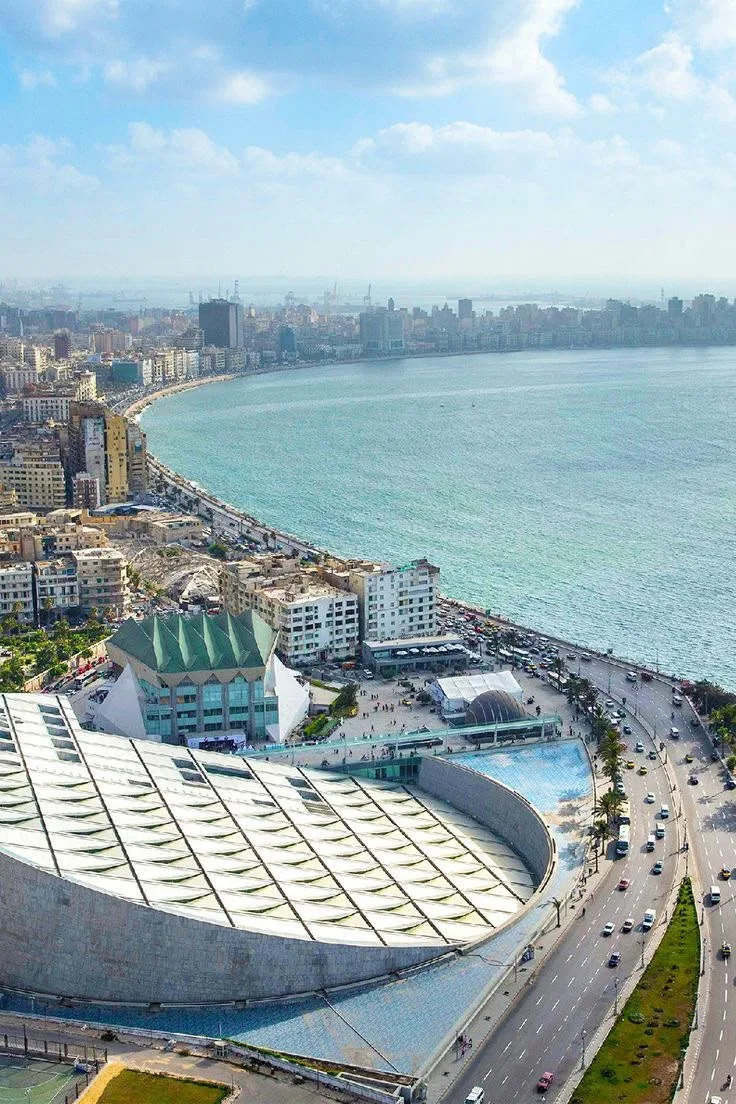
Cairo is a city, not a monument: twenty million people, a thousand years of Islamic architecture, the Coptic quarter, two world-class museums and — on its western edge — Giza. Luxor is the opposite; a modest town wrapped around an extraordinary concentration of pharaonic building, with the temples on the east bank and the tombs on the west. Aswan is where you slow down: the river at its most beautiful, Philae on its island, Nubian villages of painted houses, and the road or flight to Abu Simbel. Alexandria is Egypt's Mediterranean face, Greco-Roman rather than pharaonic, and the only place in the country that feels European. The Red Sea coast is the reason people extend a trip by a week.
How many days each one deserves
Cairo needs three days to be done without rushing — one for the Giza plateau and the Grand Egyptian Museum, one for Islamic and Coptic Cairo, one for Saqqara, Memphis and Dahshur. Luxor needs three: east bank, west bank, and a third for the things everyone skips. Aswan needs two, plus a day if Abu Simbel is on the list. Alexandria is a comfortable overnight rather than a day trip. The Red Sea is a week or nothing — three days on a reef is a tease. Add it up and the honest answer for a first visit that does not exhaust you is eight to ten days on the ground.
Getting between them
Cairo to Luxor is an hour by air and roughly ten by road, which makes the choice straightforward on any trip shorter than a fortnight. Luxor to Aswan is either a four-hour drive or, far better, three or four nights on the river. Cairo to Alexandria is under three hours by fast train through the delta. The Red Sea resorts have their own international airports, so a beach coda does not have to route back through Cairo. Domestic flights cost money and give back the one thing an itinerary cannot manufacture, which is daylight on the ground.
The places that are not on the list
Everything above is the spine. Off it, Egypt holds Abydos and Dendera — two of the most complete temples in the country, north of Luxor and almost empty; the Fayoum, ninety minutes from Cairo, with a fossil valley and Greco-Roman portraiture; Siwa on the Libyan border, a Berber oasis unlike anywhere else; and the White Desert, where the chalk formations look like a seabed because they were one. None of these belongs on a first visit of eight days. All of them are why people come back.
Choosing by how long you have
Realistic shapes rather than maximum coverage. Each assumes a private journey with a licensed Egyptologist, and each leaves the afternoons alone.
| Days on the ground | The shape that works | What it means leaving out |
|---|---|---|
| 4–5 days | Cairo and Giza only, properly | No Luxor. A short first trip spent well in one place beats two rushed ones. |
| 6–7 days | Cairo, then fly to Luxor | No Aswan and no cruise — the river stretch needs nights, not hours. |
| 8–10 days | Cairo, Luxor, a Nile cruise, Aswan | The complete classical Egypt. Nothing important is missing. |
| 12–14 days | The above plus Abu Simbel and the Red Sea, or Alexandria | Room for a second thread — diving, the Mediterranean, or the desert. |
| A second visit | Abydos, Dendera, the Fayoum, Middle Egypt, Siwa | The highlights are behind you. This is the country nobody queues for. |
Egypt destination questions
Which cities should I visit in Egypt?
For a first visit: Cairo for the Pyramids, the Grand Egyptian Museum and the medieval city; Luxor for the temples and the Valley of the Kings; and Aswan for the river, Philae and Abu Simbel. The stretch between Luxor and Aswan is best travelled by boat. Alexandria and the Red Sea are worthwhile additions once those three are covered.
How many days do you need in Egypt?
Eight to ten days on the ground covers Cairo, Luxor, a Nile cruise and Aswan without rushing. Six or seven works for Cairo and Luxor. Under five, stay in Cairo and do it properly rather than crossing the country twice. Twelve to fourteen adds Abu Simbel, Alexandria or a week on the Red Sea.
What is the best way to travel between Cairo and Luxor?
Fly. It is an hour in the air against roughly ten hours by road, and on any trip shorter than two weeks the time saved is worth considerably more than the fare. An overnight sleeper train is the pleasant alternative if you would rather watch the Nile valley arrive at dawn than sit in a departure lounge.
Is a Nile cruise worth it?
Between Luxor and Aswan, yes — and not mainly for the boat. The temples on that stretch sit on the riverbank, so arriving by water is how they were meant to be approached, and the accommodation moves while you stay put. Three or four nights is the usual length. A small restored dahabiya is a different and better experience than a large cruise vessel.
Where should I base myself in Egypt?
There is no single base — the country is too long. The standard structure is three or four nights in Cairo, then Luxor or a boat, then Aswan. Trying to run Luxor as a day trip from Cairo is a fourteen-hour day for four hours of sightseeing, and we would talk you out of it.
What every Kemet journey is
Every operator in Egypt uses the word luxury. These are the specifics behind ours — the things you can check, before you pay for anything.
A licensed Egyptologist, not a guide
Every journey is led by a guide licensed by the Egyptian Ministry of Tourism with a degree in Egyptology. They are with you at the monuments, not waiting in the car park — and they are yours for the day, answering your questions rather than reciting to forty people.
Your party only
No shared coaches. No fixed departure dates. No strangers on your itinerary. If you are two people, the vehicle, the guide and the pace belong to two people.
Built around you, then written down
We design the itinerary from your interests and your dates — not from a catalogue page. You receive it in writing before anything is paid, and it changes as often as you want it to until it is right.
One price, itemised
The quote lists what is included and what is not, line by line, before you commit. Your Egyptologist, private air-conditioned transfers and lunch on touring days are inside the price on every journey, and entrance fees are inside it on every multi-day one. Where something sits outside — monument tickets on a day tour, for instance — it is named on the page you are reading, at the rate the ticket office charges, not discovered at the end.
Reachable while you travel
You have a direct line to the people who planned your journey for the whole time you are in Egypt — not a call centre, and not a number that stops answering after the deposit clears.
Time protected, not filled
A day with four sites crammed into it is a cheaper day to sell and a worse day to live. We plan around light, heat and crowds — the Valley of the Kings at opening, the Egyptian Museum when the coaches have gone — and we leave the afternoon alone.
On price, plainly
Kemet sits at the upper end of the Egyptian market and we are comfortable saying so. A private Egyptologist for a week costs what it costs; so does a car that is yours alone and a room that faces the river rather than the car park. What we will not do is quote low, then recover the difference through optional extras, shopping stops and an itinerary that quietly turns into a group. Every price on this site is a per-person starting point for a private journey, and the written quote that follows is the price you pay.