Closed to everyone else
There are places in Egypt that can be shut to the public and held for one party. Not a quiet hour or a side entrance — the monument, empty, and the only people inside it are yours.
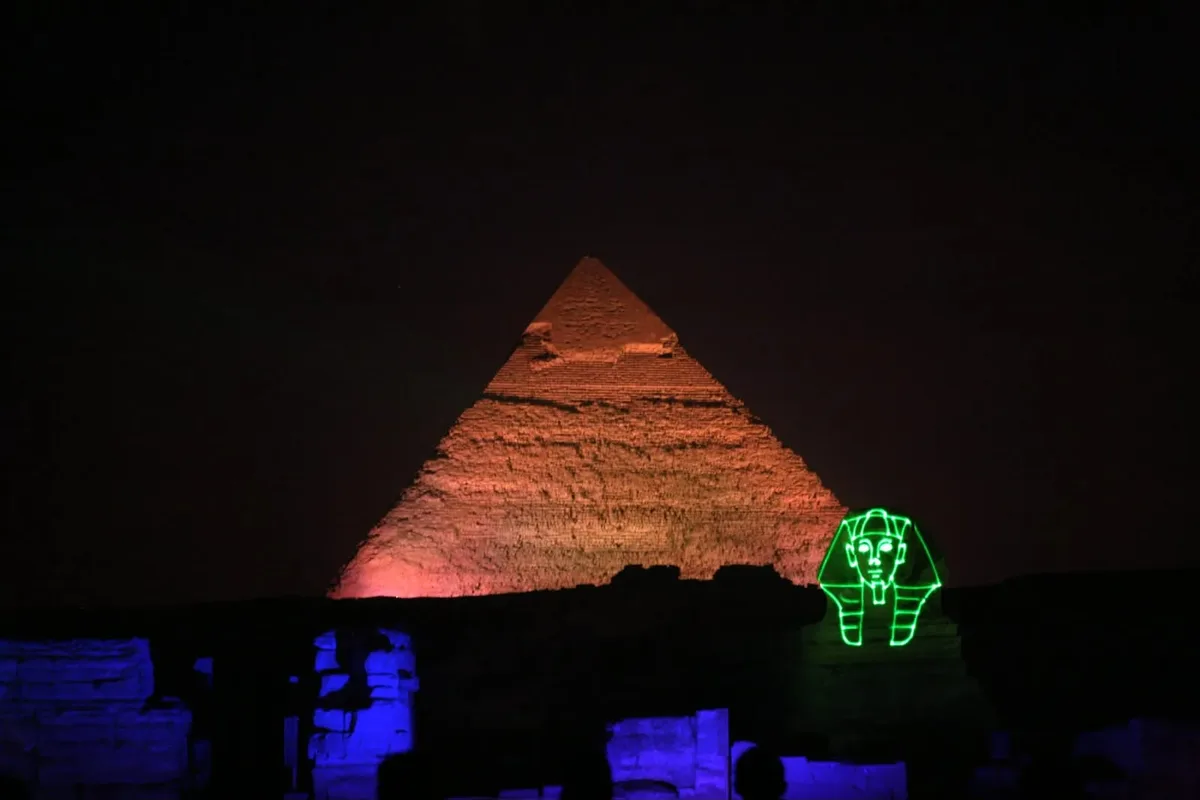
Can you book an Egyptian monument privately for an event?
Yes, for a defined list of sites. Exclusive use of an Egyptian monument is granted by permit, not by payment: a formal application goes to the Ministry of Tourism and Antiquities and, at Giza, to the Ministry of Interior and plateau supervision, stating the purpose, the exact hours and the size of the party. Kemet applies in your name and does not take a booking until the permit is granted. The Great Pyramid can be opened after public closing for two uninterrupted hours; the Giza plateau can be entered before the gates open; dinner can be laid inside the precinct at Karnak for up to around two hundred; and galleries at the Grand Egyptian Museum can be closed for a private viewing. Lead times run from several weeks to several months depending on the site.
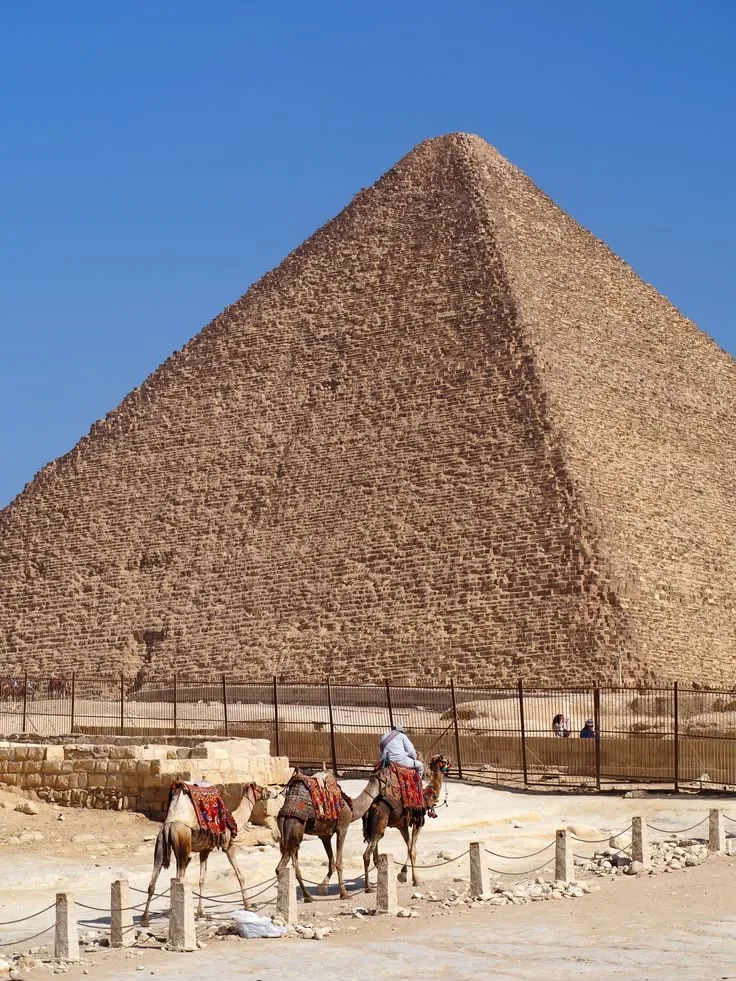
The Great Pyramid of Khufu
The King's Chamber, with nobody else in the pyramid.
The Great Pyramid closes to the public and is opened again for one party. You walk the Grand Gallery with no queue behind you and no voices ahead, and you have two uninterrupted hours inside — long enough to sit in the King's Chamber in silence, which is the thing nobody who visits in daylight ever gets to do. It is the single most difficult arrangement in Egypt and it cannot be bought online at any price.
- Inside
- Two uninterrupted hours
- Party
- Small by necessity — the chamber decides
- Permit
- Ministry of Tourism & Antiquities, Ministry of Interior, and plateau supervision
- Notice
- Months, not weeks
- A proposal
- A milestone birthday
- A private vow renewal
- A serious Egyptology interest
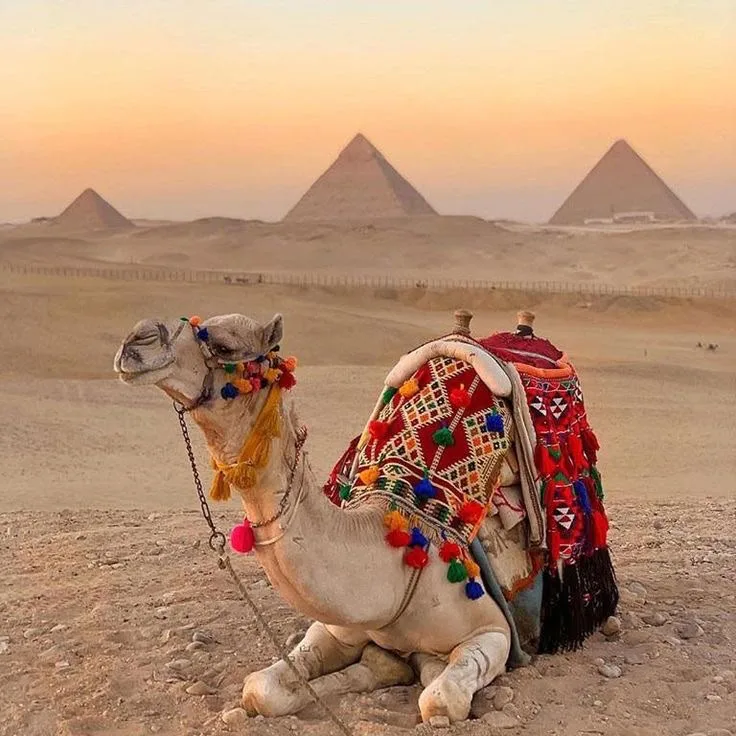
The Giza plateau before sunrise
The three pyramids and the Sphinx, before the gates open.
The plateau at first light with four hundred other people on it is a photograph everyone already has. Before the gates open it is a different place: no coaches, no camel touts, no queue at the Sphinx enclosure, and the light coming in flat across the desert from the east. Breakfast can be set on the sand facing all three pyramids while the city behind is still asleep.
- Window
- 05:00–07:00 April–September · 06:00–08:00 October–March
- Party
- From two to a large gathering
- Permit
- Special permission for entry outside official hours
- Notice
- Several weeks
- A wedding photograph
- A family gathering
- A brand or editorial shoot
- Breakfast on the sand
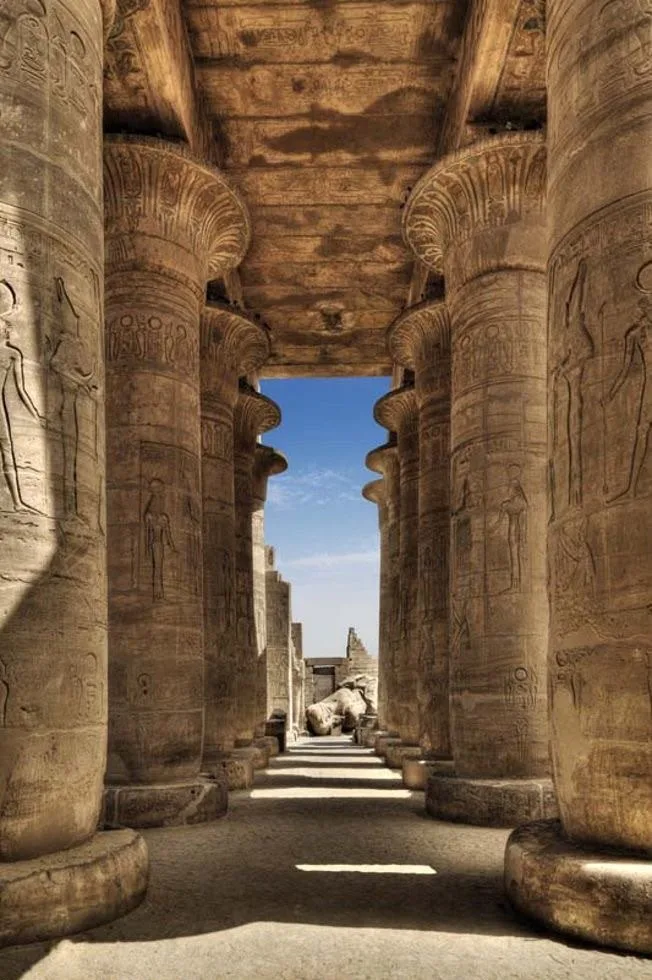
The precinct at Karnak
Dinner among the columns, after the last visitor has gone.
Karnak is the largest religious building ever raised, and the hypostyle hall holds a hundred and thirty-four columns the height of a six-storey building. After the site closes, a table can be laid inside the precinct and the columns lit from the base, which is how they were meant to be seen — from below, at night, by fire. It seats a private dinner or a gathering of two hundred without either feeling crowded.
- Capacity
- From an intimate table to around 200 guests
- Includes
- Lighting, sound, staging and catering inside the precinct
- Permit
- Site authority, applied for in your name
- Notice
- Two to three months for a full production
- A wedding dinner
- A significant anniversary
- A company's own occasion
- A private concert
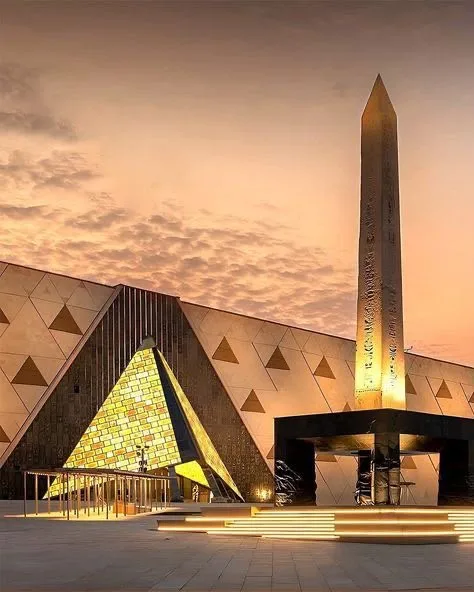
The Grand Egyptian Museum, after hours
Tutankhamun's collection, with the galleries closed.
The largest archaeological museum in the world, after the doors shut. Galleries can be closed to the public and held for one party, which means the Tutankhamun rooms — five thousand objects, the whole burial assemblage together for the first time — walked at your own pace with a curator rather than a guide. The grand staircase alone takes a reception of some size.
- When
- After public closing
- Party
- A private viewing, or a reception on the grand staircase
- Led by
- A curator, not a guide
- Notice
- Weeks — longer around the Tutankhamun galleries
- A reception
- A collector's evening
- A board dinner
- A quiet viewing for a few
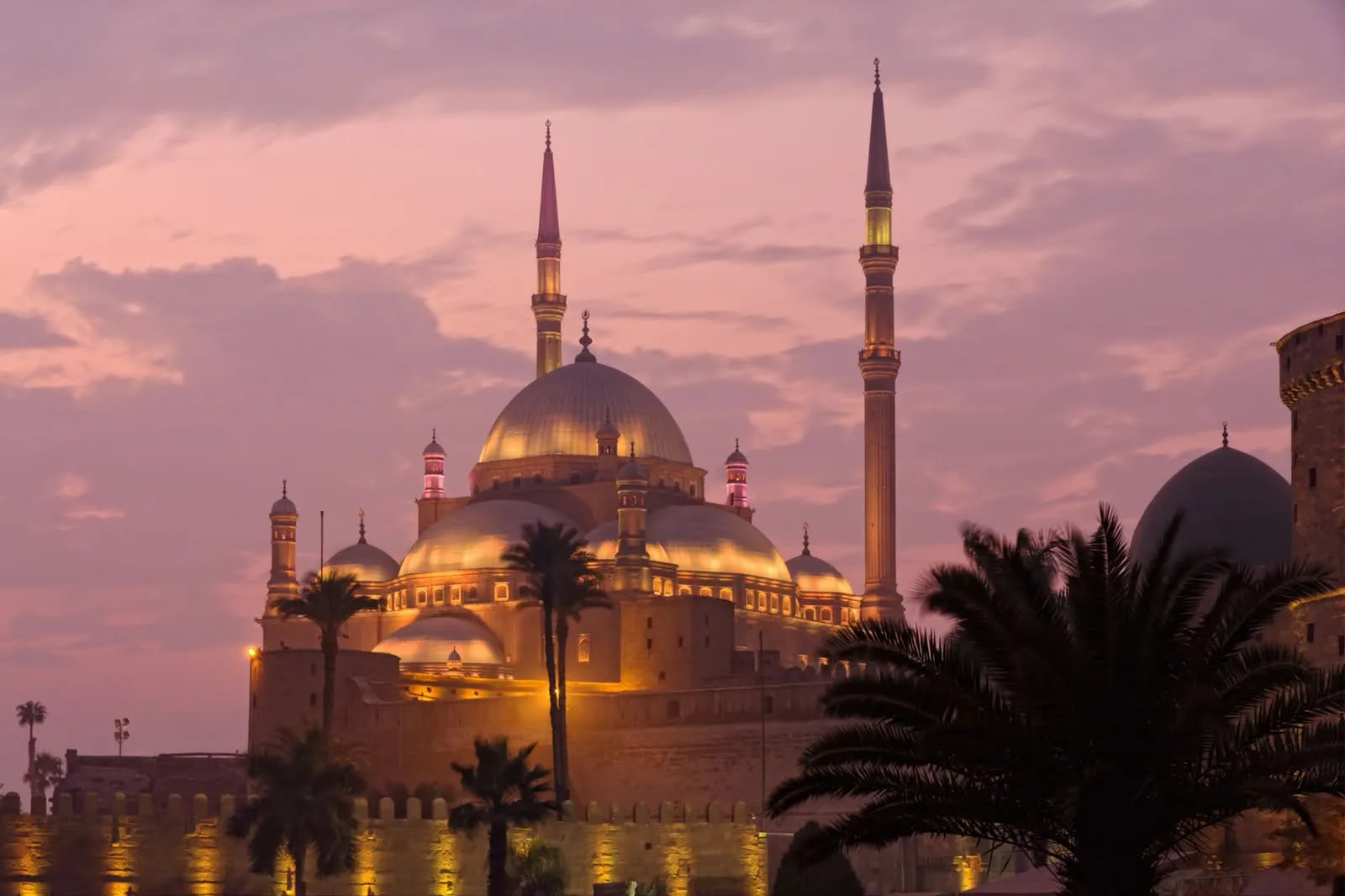
The Citadel of Salah al-Din
The alabaster mosque, and the whole city below it.
Eight hundred years of fortress on the only hill in Cairo, with the Mosque of Muhammad Ali at the top of it and the minarets of the medieval city laid out underneath. The terrace looks west over the entire capital to the pyramids on a clear evening, which makes it the one place in Cairo where a gathering can see the whole thing at once.
- The view
- West over Islamic Cairo to the Giza pyramids
- Best
- Dusk, as the call to prayer goes up across the city
- Permit
- Site authority, applied for in your name
- Notice
- Several weeks
- An evening reception
- A cultural performance
- A company's own occasion
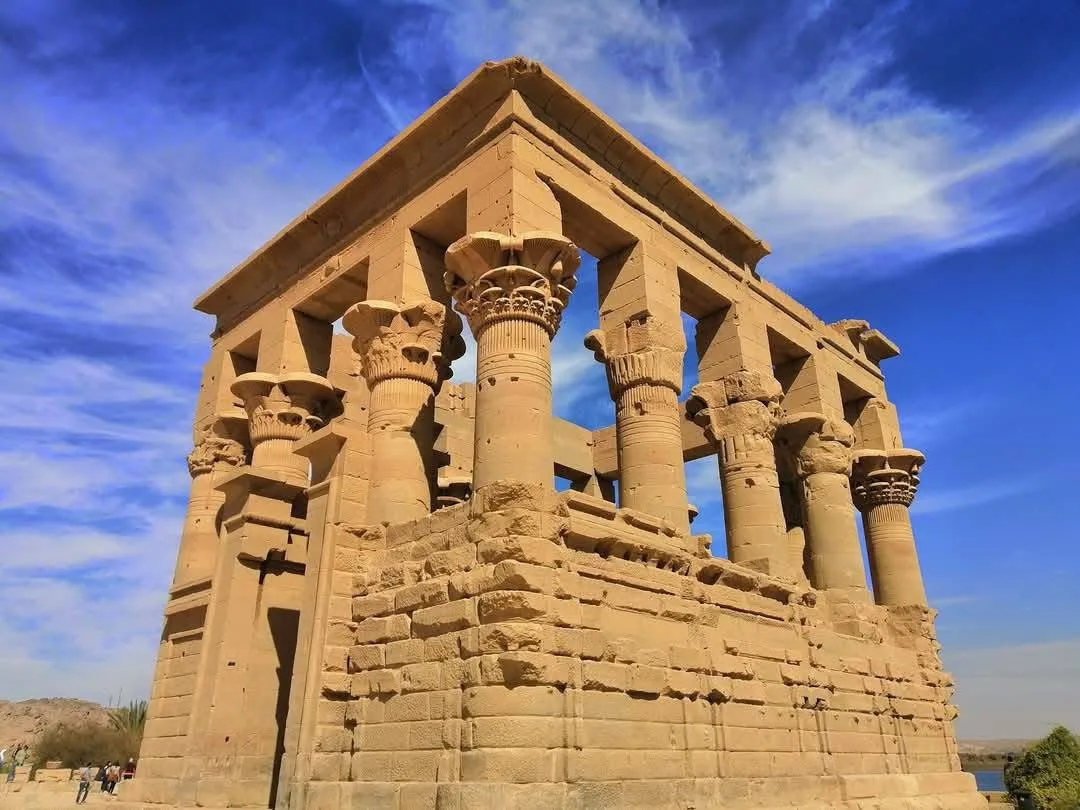
Philae, after the last launch
An island temple, and the only boat on the water is yours.
Philae sits on its own island and is reached only by boat, which makes it the most naturally private monument in Egypt: when the last public launch leaves, the island is empty. The temple of Isis was cut into forty thousand blocks and rebuilt here stone by stone when the dam rose, and at night, lit, with the water around it, it is the most theatrical setting in the country.
- Access
- By private launch only
- When
- After the last public boat
- Permit
- Site authority and river permission
- Notice
- Several weeks
- A proposal
- A wedding for few
- A private performance
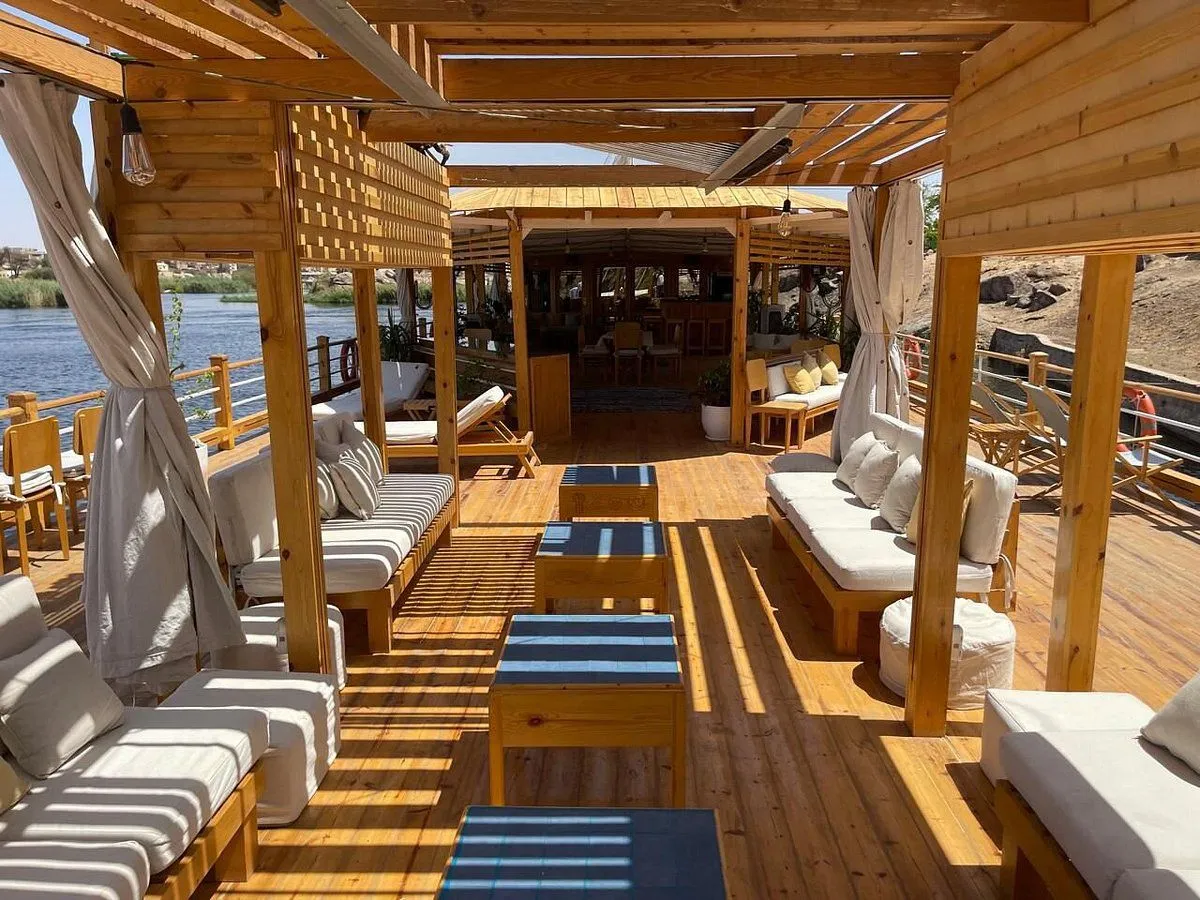
A dahabiya, whole boat
Not a cabin on a ship — the ship.
A dahabiya is the sailing boat the Nile was travelled on before engines: eight to twelve cabins, two lateen sails, no motor, and a crew that moors wherever the party wants rather than where the schedule says. Taken whole, there are no other guests, no fixed dinner sitting and no announcement over a tannoy. It is the only way to have the river itself to yourselves for a week.
- Capacity
- Typically 8–12 cabins
- Route
- Aswan to Luxor, four to six nights under sail
- Permit
- None beyond the ordinary — the boat is chartered, not permitted
- Notice
- Early. There are very few of these boats
- A family across generations
- A wedding party
- A milestone week
- A small company retreat
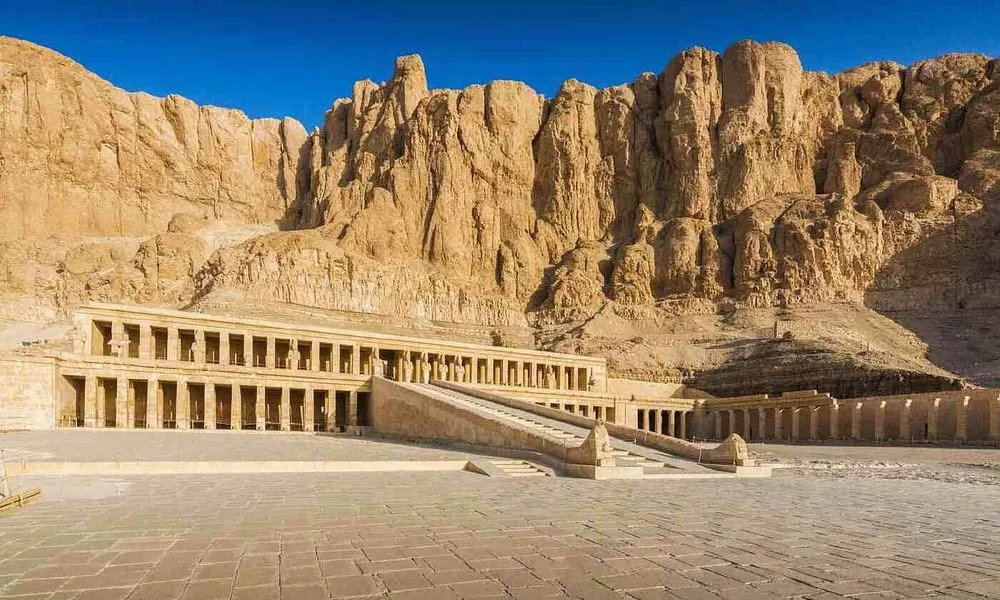
Hatshepsut's terraces
Three colonnaded terraces cut into the cliff, as a stage.
Deir el-Bahari is built straight into the rock face of the Theban mountain — three terraces, one above the next, with a ramp running up the middle of them. It has been used as a stage before, and it is the rare monument that was designed to be approached ceremonially and still works that way. Lit after dark, the cliff behind it does most of the work.
- The setting
- Three terraces against the Theban cliff
- Best
- After dark, lit from the terraces
- Permit
- Site authority, applied for in your name
- Notice
- Two to three months
- A performance
- A ceremonial arrival
- A large private dinner
A permit, not a payment
Exclusive use of an Egyptian monument cannot be bought. It is granted, in writing, by the authorities who hold the site — which is why it takes weeks or months, and why nobody can sell it to you online.
The conversation
What the occasion is, roughly when, and how many. Some sites suit twelve people and some suit two hundred, and the honest answer sometimes is that a different monument fits better than the one you had in mind.
The application
A formal request goes to the Ministry of Tourism and Antiquities — and at Giza to the Ministry of Interior and plateau supervision too — stating the purpose, the exact hours and the size of the party. It is made in your name.
The grant
Nothing is confirmed and nothing is charged until the permit is granted. A date held against an application that has not been approved is not a booking, and we will not describe it as one.
The evening
Lighting, sound, staging, catering, security, transport and an Egyptologist if the evening wants one. One person runs it and is there on the night.
On discretion
Nothing about a private arrangement is published, named or photographed by us. No client is a reference without being asked, and no evening appears on this site. If the occasion needs a non-disclosure agreement before the first conversation rather than after it, say so and one will be sent the same day.
Asked before the first conversation
Can the Great Pyramid really be booked privately?
Yes, and it is the hardest arrangement in Egypt. The pyramid is closed to the public and reopened for one party, with two uninterrupted hours inside. It is granted by permit from the Ministry of Tourism and Antiquities, the Ministry of Interior and plateau supervision, on a formal application stating the purpose, the exact hours and the size of the party. It cannot be bought online at any price, and anyone offering it as an instant booking is not offering the real thing.
How far ahead do I need to ask?
Several weeks for the Giza plateau before opening, the Citadel or a museum evening. Two to three months for a full production inside a temple precinct, because lighting, sound, staging and catering all need their own approvals. Months rather than weeks for the Great Pyramid. If you have a fixed date, that date is the first thing to tell us — everything else can be designed around a permit, but a permit cannot be designed around a date.
What does it cost?
It is quoted, not listed. The figure is built from the permit fee for that site, the size of the party, the date, and what the evening actually needs — a table for eight inside Karnak and a two-hundred-guest dinner with staging are not variations of one price. We quote in writing, itemised, before anything is committed.
What happens if the permit is refused?
Nothing is charged until a permit is granted, so a refusal costs you nothing. We will say at the first conversation how likely we think it is, and if we think a date or a site is unrealistic we will say so then rather than after a deposit. Where a refusal is possible we agree the second choice before applying, so a no does not become a lost occasion.
How many people can these sites take?
It varies more than people expect. The Great Pyramid's chamber sets its own small limit. The precinct at Karnak takes an intimate table or a gathering of around two hundred. The Giza plateau before opening takes anything from two people to a large party. A museum evening depends on which galleries are held. Tell us the number first and we will tell you which sites are honestly in range.
Is any of this published afterwards?
No. Nothing about a private arrangement is published, named or photographed by us, no client becomes a reference without being asked, and no evening appears on this site. If the occasion needs a non-disclosure agreement before the first conversation rather than after it, say so and one is sent the same day.
Can you arrange a wedding at an Egyptian monument?
A ceremony and a dinner, yes, at the sites that take a gathering — the precinct at Karnak, the Giza plateau before the gates open, the Citadel terrace, Hatshepsut's terraces. The legal marriage itself is a separate matter handled through your embassy or at home; most couples marry legally before travelling and hold the ceremony here. We will tell you plainly which part is which.
What is true of this as of everything else
Every operator in Egypt uses the word luxury. These are the specifics behind ours — the things you can check, before you pay for anything.
A licensed Egyptologist, not a guide
Every journey is led by a guide licensed by the Egyptian Ministry of Tourism with a degree in Egyptology. They are with you at the monuments, not waiting in the car park — and they are yours for the day, answering your questions rather than reciting to forty people.
Your party only
No shared coaches. No fixed departure dates. No strangers on your itinerary. If you are two people, the vehicle, the guide and the pace belong to two people.
Built around you, then written down
We design the itinerary from your interests and your dates — not from a catalogue page. You receive it in writing before anything is paid, and it changes as often as you want it to until it is right.
One price, itemised
The quote lists what is included and what is not, line by line, before you commit. Your Egyptologist, private air-conditioned transfers and lunch on touring days are inside the price on every journey, and entrance fees are inside it on every multi-day one. Where something sits outside — monument tickets on a day tour, for instance — it is named on the page you are reading, at the rate the ticket office charges, not discovered at the end.
Reachable while you travel
You have a direct line to the people who planned your journey for the whole time you are in Egypt — not a call centre, and not a number that stops answering after the deposit clears.
Time protected, not filled
A day with four sites crammed into it is a cheaper day to sell and a worse day to live. We plan around light, heat and crowds — the Valley of the Kings at opening, the Egyptian Museum when the coaches have gone — and we leave the afternoon alone.
On price, plainly
Kemet sits at the upper end of the Egyptian market and we are comfortable saying so. A private Egyptologist for a week costs what it costs; so does a car that is yours alone and a room that faces the river rather than the car park. What we will not do is quote low, then recover the difference through optional extras, shopping stops and an itinerary that quietly turns into a group. Every price on this site is a per-person starting point for a private journey, and the written quote that follows is the price you pay.
Tell us the occasion
Dates first, if you have them — the permit is the long pole and everything else follows it. If what you have in mind is not possible we will say so in the first reply rather than the fourth.