Alexandria
Egypt's Mediterranean port founded by Alexander the Great — Greco-Roman ruins and the reborn Library.
Overview
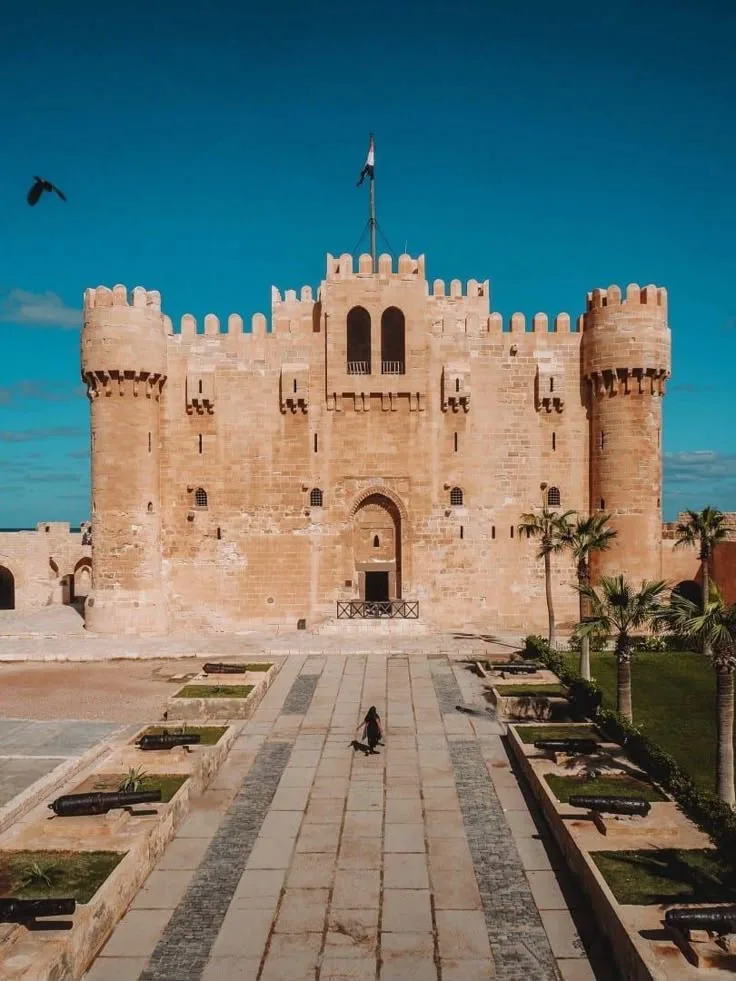
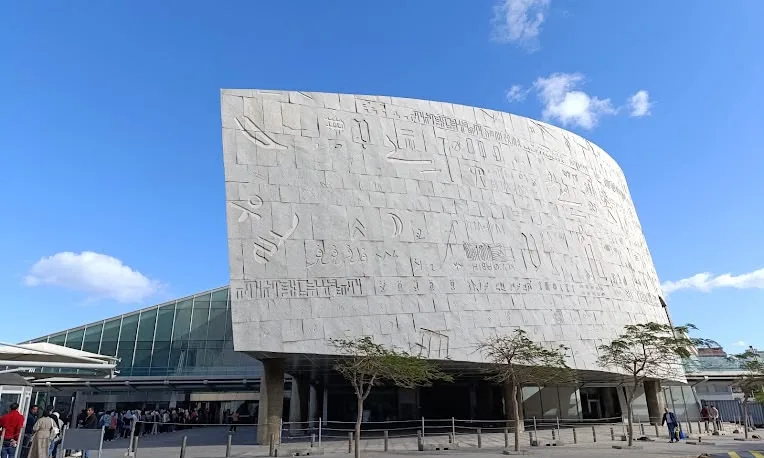
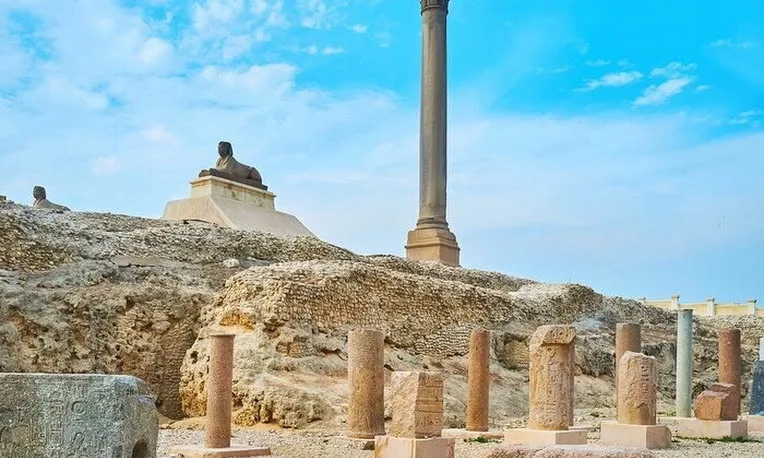
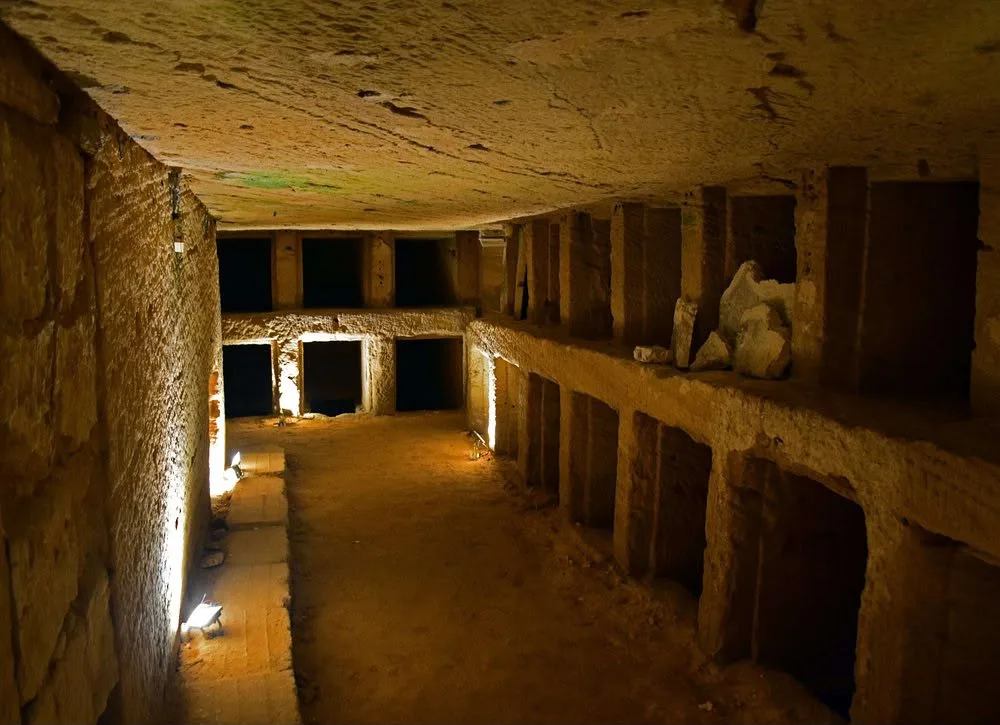
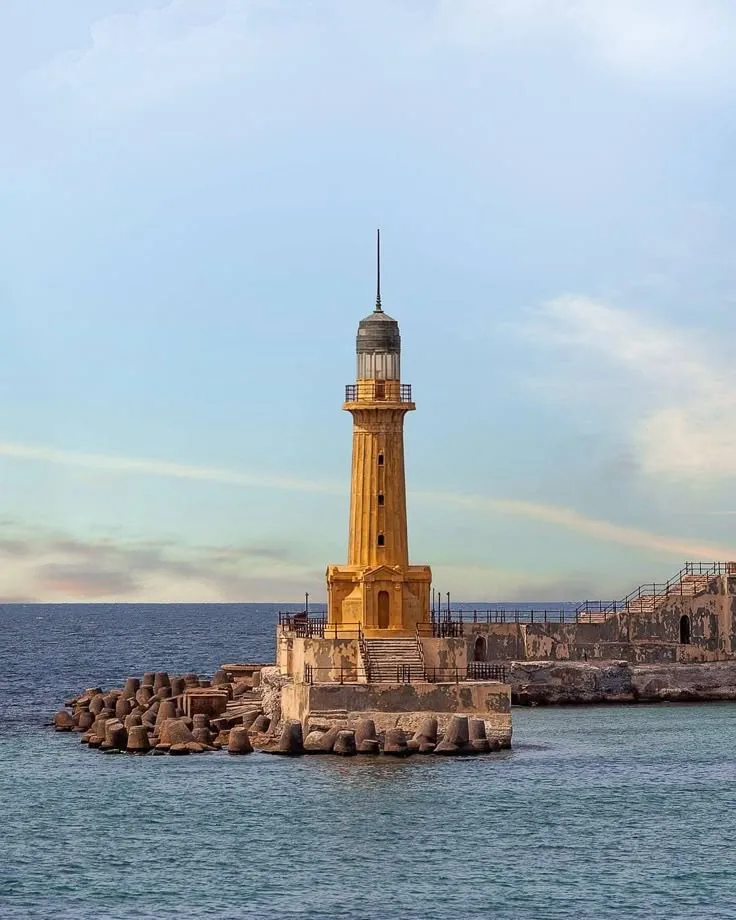
Alexandria was founded in 331 BCE by Alexander the Great on a narrow strip of land between the Mediterranean Sea and Lake Mareotis, chosen for its natural harbour and its position as a pivot between Africa and the Greek world. For three centuries under the Ptolemaic dynasty it was the foremost intellectual city in the ancient world — home to the great Library, founded around 295 BCE, which sought to gather a copy of every text in existence; the Mouseion, an early academy of scholars; and the Pharos lighthouse, built around 280 BCE and one of the Seven Ancient Wonders, which guided ships into the harbour for eight centuries before earthquakes brought it down in the fourteenth century CE. The city's layered past is visible across its surviving monuments. The Catacombs of Kom El Shoqafa, a second-century CE Roman-era necropolis discovered in 1900 when a donkey fell through the entrance, descend three levels underground and blend Egyptian, Greek and Roman funerary motifs in a way unique in the ancient world. Pompey's Pillar — actually raised in honour of the Emperor Diocletian in 297 CE — is a 27-metre monolithic column standing among the ruins of the ancient Serapeum, the largest Roman column outside Constantinople. The Citadel of Qaitbay, built by the Mamluk sultan in 1477 CE using stones from the ruined Pharos, looks out to sea from the exact spot where the ancient lighthouse stood. Modern Alexandria is a working Mediterranean port city of over five million people — cooler and breezier than the Nile valley, with a 20-kilometre corniche seafront. The Bibliotheca Alexandrina, opened in 2002, is a deliberate revival of the ancient Library's spirit: a vast circular building of grey granite and glass holding over two million volumes.
Historical importance. The foremost intellectual centre of the ancient Mediterranean world for over three centuries: home to the great Library, the Mouseion academy, the Pharos lighthouse (one of the Seven Ancient Wonders) and the first systematic collection of world knowledge. Capital of Ptolemaic Egypt and the city where Cleopatra VII ruled.
Cultural importance. Historically the most cosmopolitan city of the ancient world, drawing Greek, Egyptian, Jewish, Roman and later Arab cultures into a single urban fabric. The 'Alexandrian spirit' — synthesis of traditions, intellectual inquiry and Mediterranean openness — remains the city's defining character and the explicit inspiration for the modern Bibliotheca Alexandrina.
Why visit
- The Catacombs of Kom El Shoqafa — one of antiquity's most unusual and compelling underground monuments
- The Citadel of Qaitbay on the exact site of the ancient Pharos lighthouse, one of the Seven Wonders of the Ancient World
- The Bibliotheca Alexandrina — the contemporary heir to the world's most famous library
- Mediterranean Egypt — a cooler, coastal, intellectually rich counterpoint to the heat and density of the Nile valley
Highlights
- The Catacombs of Kom El Shoqafa — a three-level Roman necropolis blending Egyptian, Greek and Roman art
- Pompey's Pillar — the largest ancient monolithic column outside Constantinople, standing in the ruins of the Serapeum
- The Citadel of Qaitbay, built on the exact site of the Pharos lighthouse
- The Bibliotheca Alexandrina — the contemporary heir to the ancient Library, opened in 2002
- Alexandria's 20-kilometre Mediterranean corniche and its celebrated seafront seafood culture
Things to know
- Alexandria is a 2.5 to 3-hour drive each way from Cairo on the desert road — a long but rewarding full-day trip; an overnight stay allows a more comfortable pace.
- Sea breezes make Alexandria noticeably cooler than the Nile valley — a genuine advantage in summer, worth a light layer in winter evenings.
- Seafood ordered by weight and grilled or fried to order at corniche restaurants is the local speciality.
- The Catacombs of Kom El Shoqafa involve a spiral staircase descending three levels underground — not suitable for visitors with limited mobility.
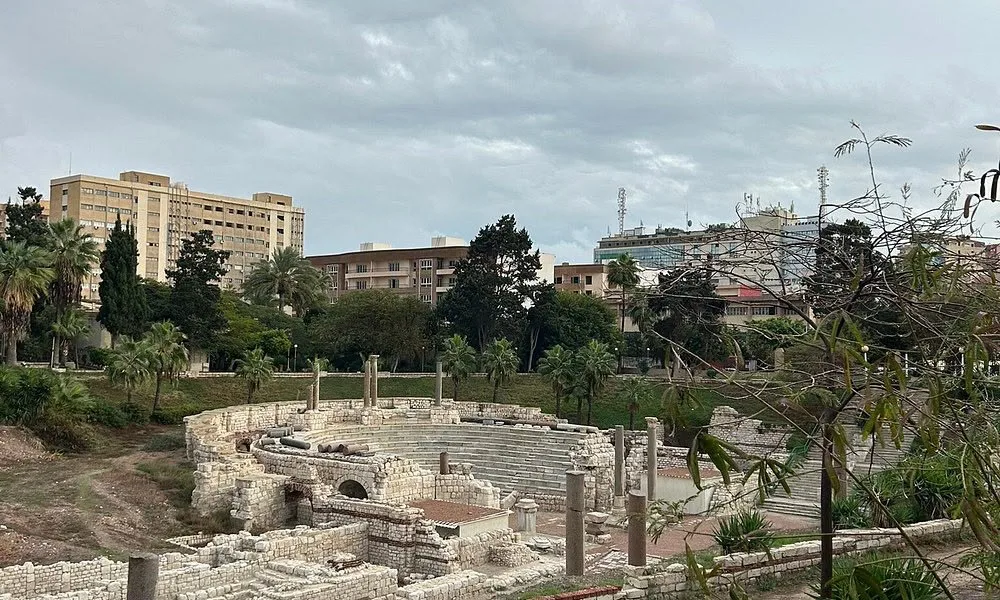
- The Greco-Roman Museum was undergoing renovation as of 2026 — confirm its status when planning your visit.
Photography
- The Citadel of Qaitbay against the open Mediterranean from the sea walls
- The sweep of the Alexandria corniche at dusk, with the city's art-deco facades
- The circular disc of the Bibliotheca Alexandrina from above or from the waterfront
Season overview
Travel essentials
Good to know
Is Alexandria worth visiting as a day trip from Cairo?
Yes — it is the most rewarding day trip from Cairo. The drive (2.5 to 3 hours each way) is long, which is why the day starts early, but the combination of the Catacombs, the Citadel, the Bibliotheca Alexandrina and a seafront seafood lunch makes it genuinely worthwhile. An overnight stay in Alexandria allows a more relaxed pace, time on the corniche in the evening and access to the city's distinct atmosphere.
Is the ancient Library of Alexandria still there?
No. The original Library of Alexandria was lost in stages over several centuries through fire, conflict and gradual neglect — not in a single dramatic event. The Bibliotheca Alexandrina, opened in 2002, is a modern institution built in deliberate cultural homage to the ancient Library on the approximate original site. It is a new building, not a recovery of the original, but it holds over two million volumes and is one of the most architecturally striking buildings in Egypt.
How is Alexandria different from the rest of Egypt?
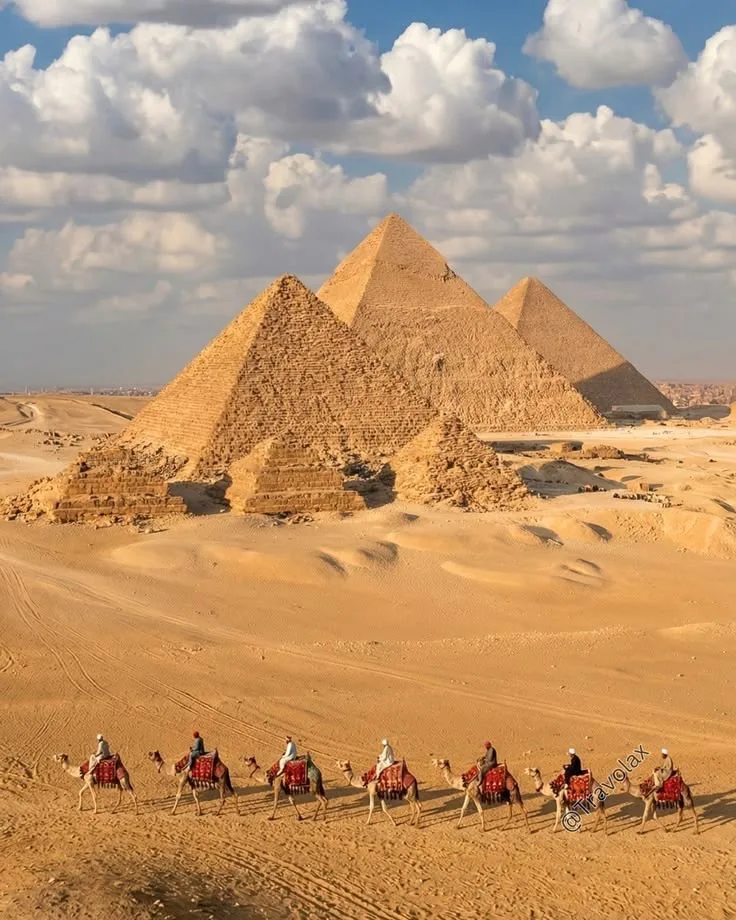
Alexandria feels Mediterranean rather than Nile-valley. The climate is cooler, the pace is slower, the food culture is built around seafood, and the historical character is Greco-Roman rather than pharaonic. There are no pyramids or temple complexes — the appeal is layered cosmopolitan history (Hellenistic, Roman, medieval Arab), its distinctly European-influenced architecture and the pleasure of being by the sea. Many visitors find it a refreshing change of register after Cairo and Luxor.
What is Pompey's Pillar, and why is it named after Pompey?
Pompey's Pillar is a 27-metre Roman triumphal column standing among the ruins of the ancient Serapeum in Alexandria — the largest ancient monolithic column outside Constantinople. Despite the popular name, it has nothing to do with the Roman general Pompey: it was erected in 297 CE in honour of the Emperor Diocletian. The misnaming originated with medieval European travellers who incorrectly connected it to Pompey's death in Egypt. The column is carved from a single piece of Aswan pink granite.
Alexandria in photographs
Featured tours
Private journeys that visit Alexandria.
Egypt Icons & Nile Cruise
Our most complete journey: Cairo, Alexandria, a sleeper train south, and a three-night Nile cruise from Aswan to Luxor — every layer of Egypt in one arc.
Egypt Highlights Deluxe
The headline acts of Egypt in seven days — the Egyptian Museum, Alexandria, the temples and tombs of Luxor, and the Pyramids of Giza.
From Pyramids to the Sea
A compact northern journey — the Egyptian Museum, Alexandria's Greco-Roman layers, the Pyramids of Giza and medieval Cairo.
Alexandria Sightseeing
The Catacombs of Kom El Shoqafa, Pompey's Pillar, the Citadel of Qaitbay on the old Pharos site and the Bibliotheca Alexandrina, with a seafood lunch.
The Grand Tour of Egypt
Our most complete journey: two capitals, a Nile cruise, Ramesses II's mountain temple at Abu Simbel, and four Red Sea days to absorb it all.
Alexandria Overnight
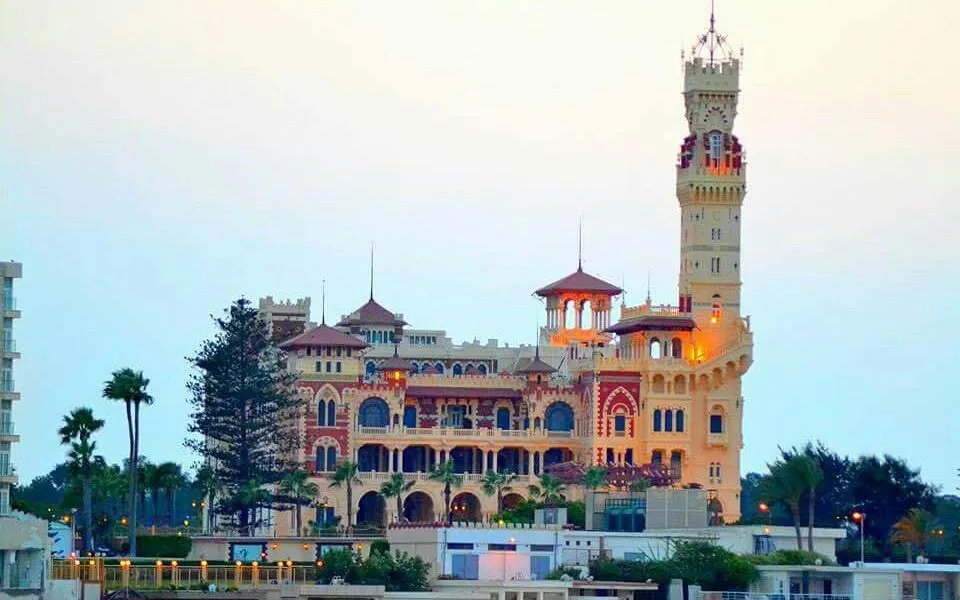
Alexandria with its missing half restored: the Greco-Roman sites by day, then the corniche at dusk, seafood by the water and the morning light day-trips never catch.
Featured experiences
Activities and private experiences based in Alexandria.
Need help planning?
Tell us your travel dates, group size and what matters most to you. We design every itinerary from scratch — no templates.