Luxor
The open-air museum of ancient Thebes — Karnak, Luxor Temple and the royal tombs of the Valley of the Kings.
Overview
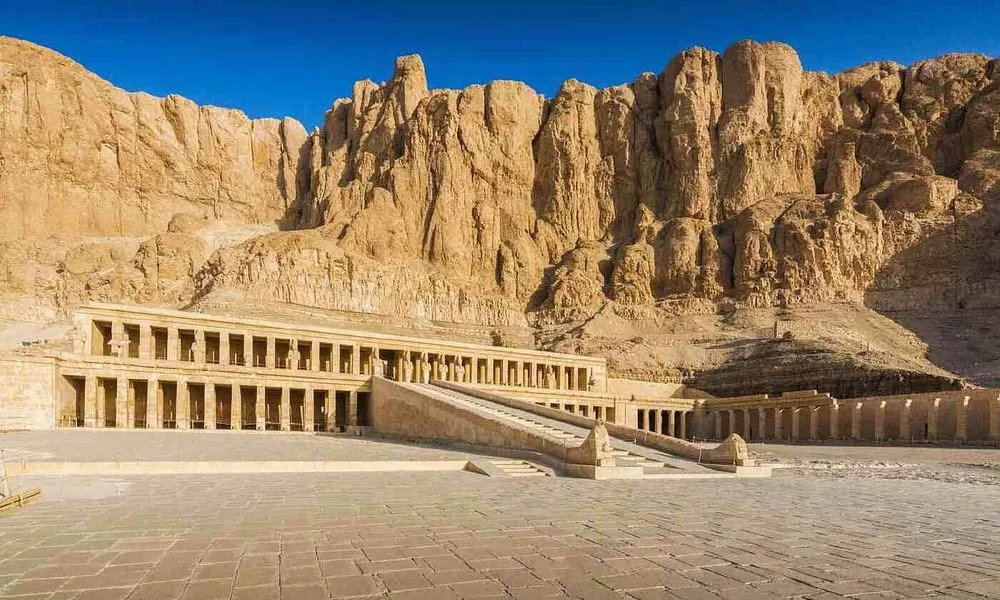
Luxor stands on the east bank of the Nile at the site of ancient Thebes, the capital of Egypt at the height of the New Kingdom (c. 1550–1070 BCE). The concentration of monuments here is greater than anywhere else on earth. On the East Bank stand the temples of the living city: Karnak, the largest religious complex ever constructed — a 2-kilometre enclosure of temples, hypostyle halls and processional avenues built continuously over thirteen centuries by successive pharaohs — and the riverside Luxor Temple, connected to Karnak by the 2.7-kilometre Avenue of Sphinxes, lined with 1,057 ram-headed sphinxes and dramatically illuminated after the avenue's 2021 restoration. The West Bank was the ancient city of the dead: the Valley of the Kings, where sixty-two royal tombs have been discovered cut into the limestone Theban hills, including the intact tomb of Tutankhamun found by Howard Carter in 1922; the terraced mortuary temple of Hatshepsut at Deir el-Bahri; and the Colossi of Memnon — two 18-metre quartzite statues of Amenhotep III that are all that remains of what was once Egypt's largest funerary temple. Luxor is not a ruin city but a working town of half a million people whose residents live alongside, and sometimes within, three and a half thousand years of stone.
Historical importance. Capital of Egypt at the height of its imperial power during the New Kingdom, and the burial place of its greatest pharaohs — Ramesses II, Seti I, Tutankhamun, Hatshepsut and Thutmose III among them. No city on earth holds a comparable density of surviving ancient monuments.
Cultural importance. The richest surviving record of ancient Egyptian temple art, royal funerary practice and New Kingdom theology. Every major Egyptological discovery of the last two centuries has centred on Luxor's monuments — Karnak alone was under excavation for over a century before its main features were fully mapped.
Why visit
- Karnak — the largest ancient religious complex ever built, spanning thirteen centuries of continuous construction
- The Valley of the Kings — sixty-two royal tombs in the Theban hills, including Tutankhamun found intact in 1922
- The illuminated Avenue of Sphinxes at night — 1,057 sphinxes lining a 2.7 km restored processional road
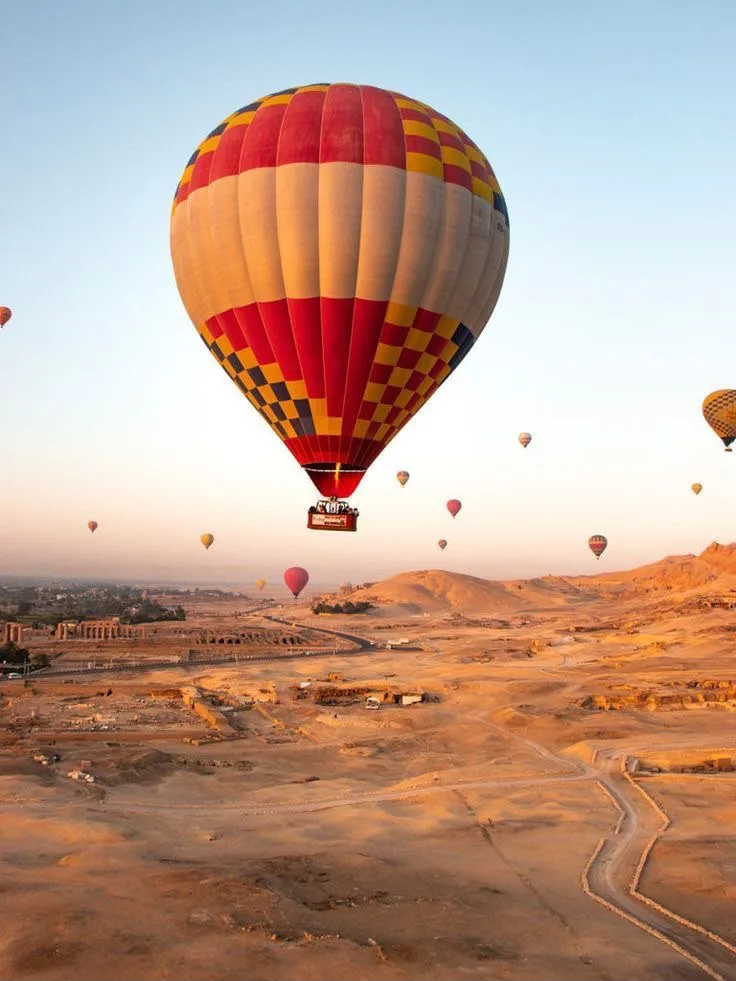
- Hot-air ballooning over the West Bank at dawn — one of Egypt's most distinctive and celebrated experiences
Highlights
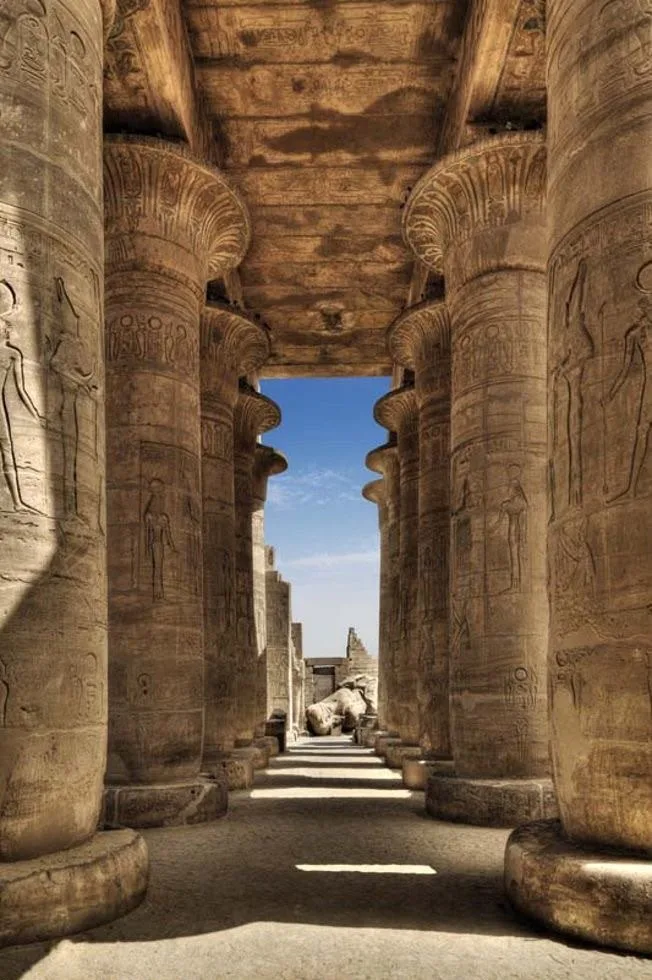
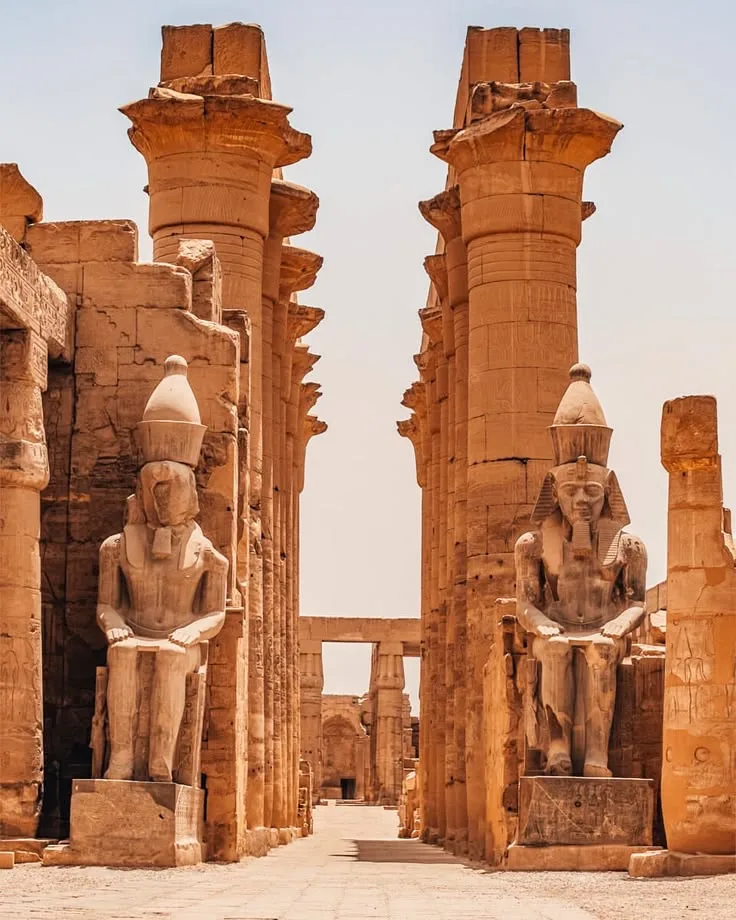
- Karnak Temple and its great hypostyle hall — 134 columns up to 23 metres tall, built for Ramesses II
- Luxor Temple in the heart of the city, illuminated along the Avenue of Sphinxes after dark
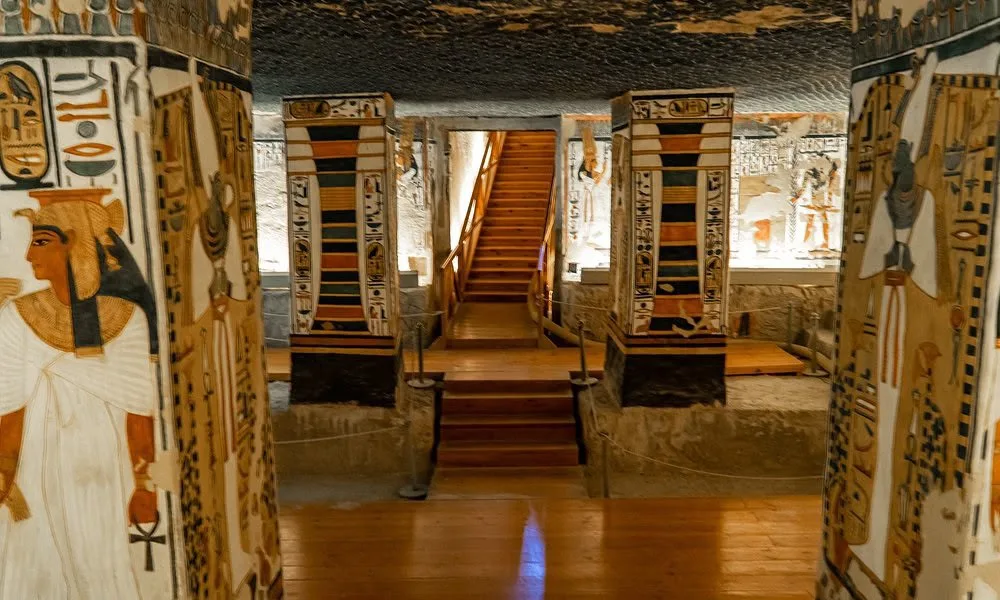
- The Valley of the Kings — 62 royal tombs including Tutankhamun, Ramesses II and Seti I
- The mortuary temple of Hatshepsut, terraced into the Theban cliffs at Deir el-Bahri
- The Colossi of Memnon — 18-metre statues of Amenhotep III guarding the West Bank plain
Things to know
- Start monument visits early — Karnak and the Valley of the Kings are best before 9 am, when temperatures and crowd density both rise sharply.
- The standard Valley of the Kings ticket includes three tombs; separate tickets are sold for Tutankhamun's tomb, Seti I and Ramesses V/VI — confirm with your guide which to prioritise.
- Photography rules differ by tomb — some ban cameras entirely, others allow without flash. Your guide will advise before you enter each.
- Luxor Temple is open after dark and illuminated; a night visit to the Avenue of Sphinxes is one of the most dramatic experiences in Egyptian heritage travel.
- East and West Banks are connected by Luxor Bridge (by vehicle) or a local ferry — your guide manages all logistics.
Photography
- Karnak's hypostyle columns in low morning light before the tour groups arrive
- Hot-air balloons drifting over the West Bank temples at dawn
- The Avenue of Sphinxes at Luxor Temple after dark, floodlit and still
Season overview
Travel essentials
Good to know
How many days should I spend in Luxor?
Two full days is the practical minimum. Day one covers Karnak and Luxor Temple on the East Bank. Day two covers the Valley of the Kings, Hatshepsut's temple and the Colossi of Memnon on the West Bank. Three days allows a more relaxed pace, time at the Luxor Museum, and an evening at the illuminated avenue or a sunrise balloon flight. Most visitors who spend only one day in Luxor return wishing they had planned for two.
What is the difference between the East Bank and West Bank in Luxor?
In ancient Thebes, the East Bank was the city of the living — where the temples of Karnak and Luxor Temple were built for the worship of Amun and the celebration of kingship. The West Bank was the city of the dead: the necropolis where all royal burials were made. Ancient Egyptians placed their dead on the west because the setting sun disappeared into the west each evening, symbolising the passage into the afterlife. The distinction is still the framework for visiting Luxor today.
Is Tutankhamun's tomb worth visiting in the Valley of the Kings?
Yes, with an important caveat. Tutankhamun's tomb (KV62) is much smaller than those of Ramesses II or Seti I — all the treasure was removed and is now at the Grand Egyptian Museum in Cairo. What remains is the burial chamber with its painted walls in exceptional condition, and the king's mummy still in situ in its outermost coffin. The tomb's historical significance is immense. Its visual scale, however, is modest compared to the great Ramesside tombs nearby.
Can you take a hot-air balloon flight over Luxor?
Yes. Balloon flights over Luxor's West Bank at dawn are among Egypt's most celebrated experiences, available most mornings between October and May. Flights last approximately 45 to 60 minutes and launch from the West Bank to drift over the Theban hills, the Valley of the Kings and the mortuary temples. Your tour operator arranges booking; flights go ahead subject to wind conditions.
Luxor in photographs
Featured tours
Private journeys that visit Luxor.
Egypt Icons & Nile Cruise
Our most complete journey: Cairo, Alexandria, a sleeper train south, and a three-night Nile cruise from Aswan to Luxor — every layer of Egypt in one arc.
Egypt Highlights Deluxe
The headline acts of Egypt in seven days — the Egyptian Museum, Alexandria, the temples and tombs of Luxor, and the Pyramids of Giza.
Cairo to Luxor & Aswan
A fast, flight-included loop through Luxor and Aswan — Karnak, the Valley of the Kings, Philae and the High Dam — out and back from Cairo.
Nile in Style: Aswan to Luxor
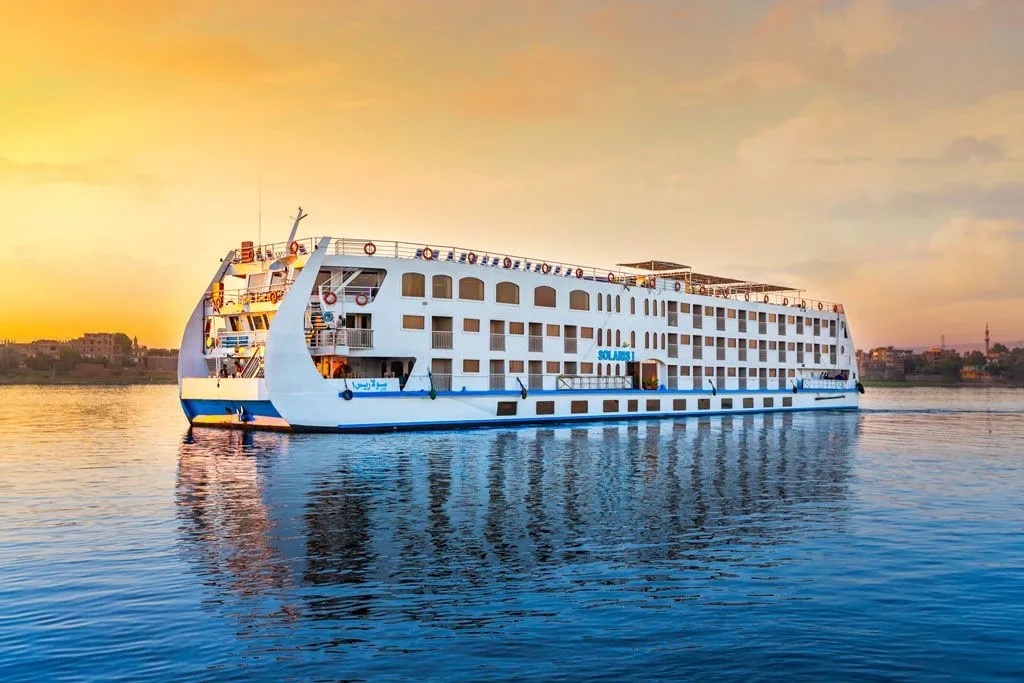
The essential Nile cruise, done properly — Philae and the High Dam, three nights afloat past Kom Ombo and Edfu, and Luxor's East and West Banks with your own Egyptologist.
Temples of the South
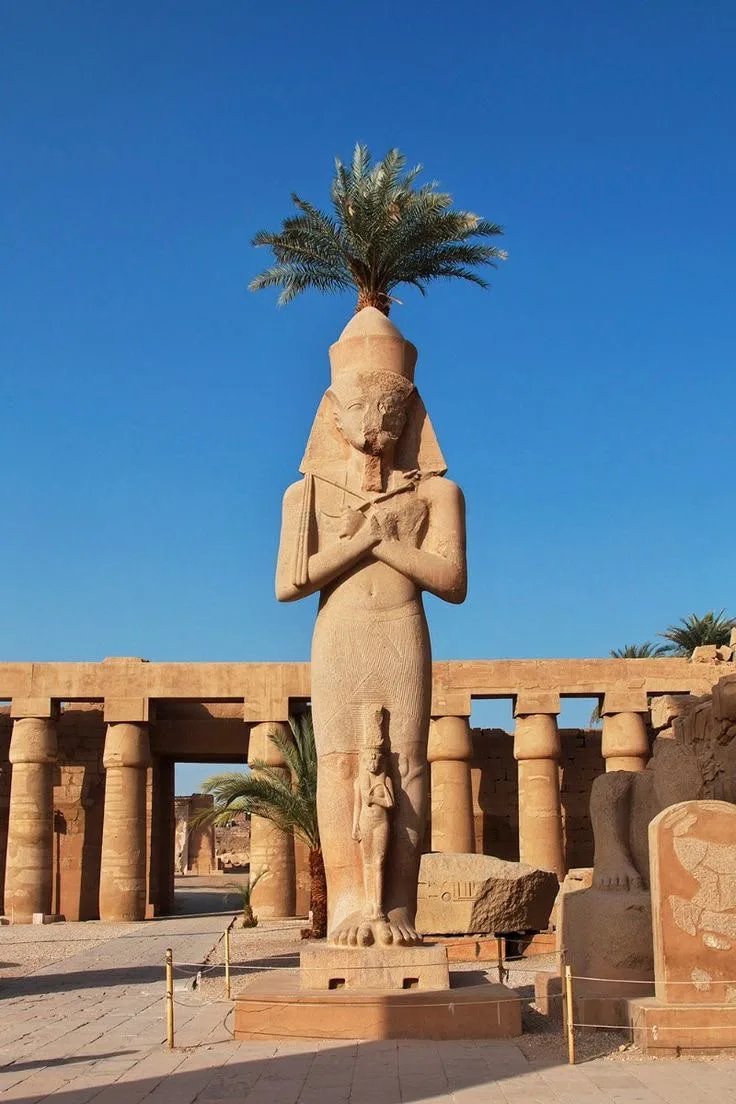
The deep-history heart of Egypt by private road journey — Karnak, the Valley of the Kings, Edfu, Kom Ombo and Philae, with time to actually absorb them.
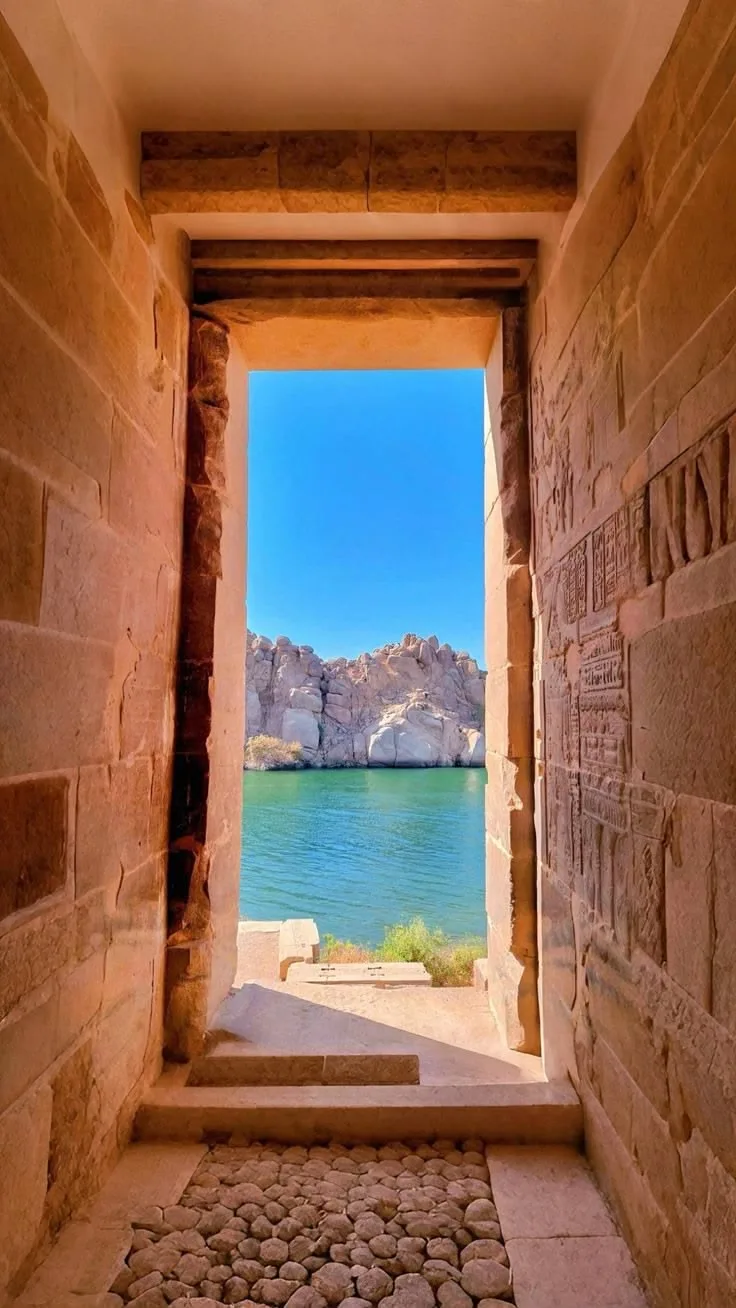
Honeymoon on the Nile
Egypt as a honeymoon should be — private sunrise at the pyramids, a felucca at golden hour, three nights on the Nile and suites chosen for the view.
Featured experiences
Activities and private experiences based in Luxor.
Luxor Temple by Night
Walk the illuminated Avenue of Sphinxes into Luxor Temple after dark — one of the most dramatic experiences in Egyptian heritage tourism, now fully accessible following the 2021 restoration.
Hot-Air Balloon over Luxor
Drift over the Theban necropolis at dawn — the Valley of the Kings, Hatshepsut's temple and the Nile's green edge, seen the way only a balloon allows.
Need help planning?
Tell us your travel dates, group size and what matters most to you. We design every itinerary from scratch — no templates.