A private group, not a group tour
Six to sixteen people who already know each other, and nobody who doesn't.
There is a persistent confusion in this industry between a group tour and a group travelling privately. The first sells you a seat next to a stranger on a fixed date. The second is a journey that belongs entirely to your party — a family that has grown, a set of friends who have been threatening this for years, a small company taking its people somewhere that is not a conference hotel. The size is similar. Nothing else is.
What changes
Larger parties make private travel cheaper per person, not more expensive, because the guide, the vehicle and the driver are shared across more people rather than fewer. What changes is coordination: room configurations that actually suit who is sharing with whom, a pace that works for the slowest walker without boring the fastest, and — above a certain size — a second guide so nobody is at the back of a group of sixteen straining to hear.
What we would suggest
Specific rather than aspirational. Where something depends on a permission or a single boat, it says so — we would rather tell you now than after you have paid.
One boat, entirely yours
A dahabiya has eight to twelve cabins. At the right party size you take the whole boat: no other passengers, no fixed dinner sitting, no schedule but yours. It is the cleanest version of private group travel that exists in Egypt and, split across twelve people, it is not the number most people expect.
Two guides, one itinerary
Above about ten people, one guide talking to everyone means half the party hears half of it. Two Egyptologists let the group split naturally — the ones who want the full hour in the tomb, and the ones who want the courtyard and the shade — and rejoin for lunch.
Days that fork and rejoin
Nobody in a group of twelve wants the same Tuesday. We build days that split — a balloon at dawn for the six who want it, a slow morning for the six who do not — and put everyone back together for the afternoon. This is only possible when the vehicles and guides are yours.
The long table
The part people remember is rarely a monument. It is the dinner where all twelve of you were at one table on a deck, or in a garden in Aswan, or on a roof in Cairo. Private group travel is the only version where that table can be arranged properly every single night.
Worth knowing before you plan
- Six is where the economics turn decisively in your favour. Twelve is where a whole boat becomes reasonable. Above sixteen we plan it as two coordinated parties rather than one large one — the experience degrades past that point and we would rather say so.
- One person is the point of contact for planning, but we are happy to send the itinerary to everyone. Group trips fall apart over information, not over money.
- Room configuration is the single most common source of friction. Send us who is sharing with whom at the start, not after the hotels are held.
- Pace is set by the party, not the plan. Tell us honestly about mobility, ages and stamina and the itinerary is built for the real group rather than the ideal one.
- A deposit confirms the whole party; individual balances can be settled separately if that is easier.
Starting points
Private throughout, led by a licensed Egyptologist, rewritten around your dates and your party. Prices are per person and fall as the party grows.

The Grand Tour of Egypt
Our most complete journey: two capitals, a Nile cruise, Ramesses II's mountain temple at Abu Simbel, and four Red Sea days to absorb it all.
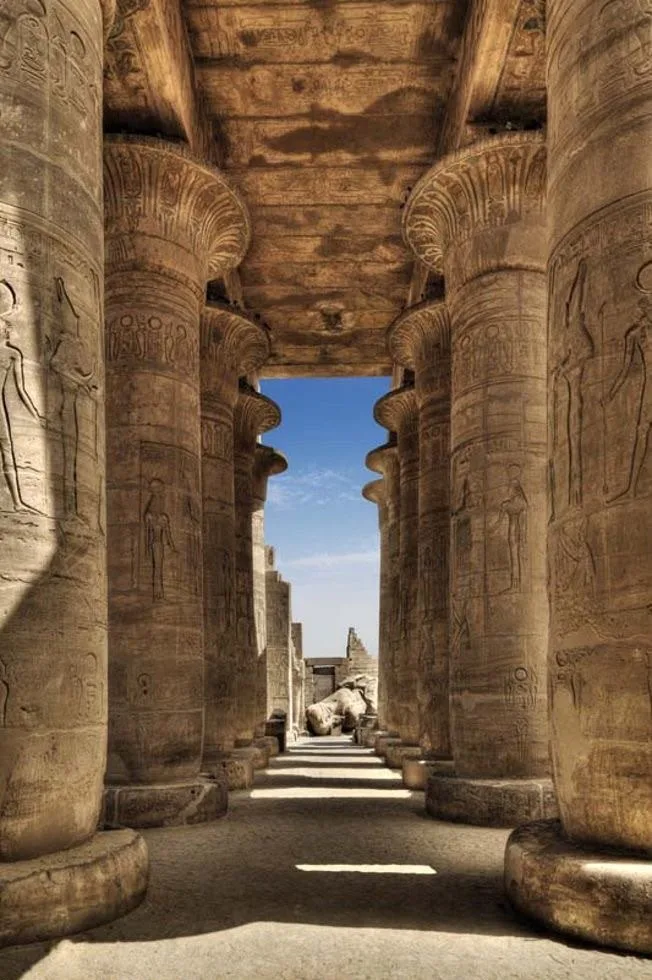
Egypt Icons & Nile Cruise
Our most complete journey: Cairo, Alexandria, a sleeper train south, and a three-night Nile cruise from Aswan to Luxor — every layer of Egypt in one arc.
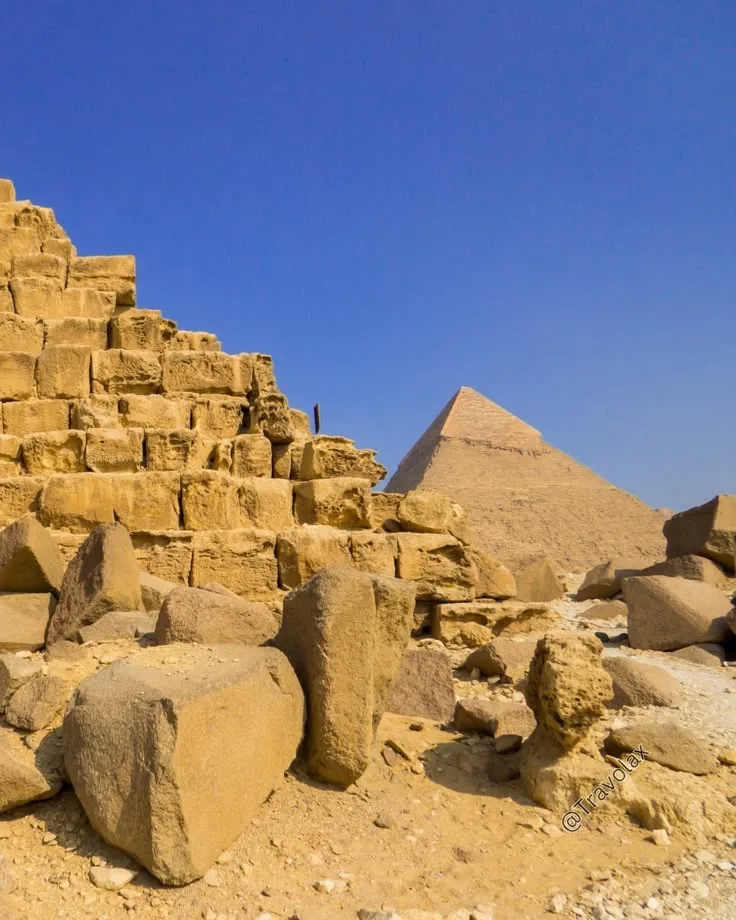
Family Egypt: Pyramids to the Nile
Egypt with children done right: short guided mornings, family-specialist Egyptologists, pool afternoons, and the moments no classroom can match.
A private group — questions
What is the difference between a private group and a group tour?
A group tour sells individual seats on a fixed departure — you travel with strangers, on their dates, following an itinerary you cannot change. A private group journey is the opposite in every respect: everyone travelling knows each other, the dates are yours, and the itinerary is written for your party alone. Kemet only does the second.
How many people can travel together?
Comfortably up to about sixteen. Six to twelve is the range where a private journey works best — large enough that the per-person cost is low, small enough that one table, one boat and one conversation still work. Above sixteen we plan it as two parallel parties with coordinated logistics rather than pretending a group of thirty is intimate.
Is a private group cheaper per person than travelling as a couple?
Usually, and often substantially. The guide, the vehicle and the driver cost the same regardless of how many people use them, so the per-person share falls as the party grows. A family of eight frequently pays less per head for a fully private journey than a couple pays for the same itinerary.
Can we charter an entire Nile boat?
Yes. A dahabiya typically has eight to twelve cabins and can be taken whole. A standard cruise vessel can also be chartered but the economics rarely justify it — the dahabiya is the better boat and the sensible size for a private party.
Can everyone pay separately?
Yes. One deposit confirms the journey, and individual balances can be settled separately if that suits the party better. We will invoice however is easiest.
What every Kemet journey is
Every operator in Egypt uses the word luxury. These are the specifics behind ours — the things you can check, before you pay for anything.
A licensed Egyptologist, not a guide
Every journey is led by a guide licensed by the Egyptian Ministry of Tourism with a degree in Egyptology. They are with you at the monuments, not waiting in the car park — and they are yours for the day, answering your questions rather than reciting to forty people.
Your party only
No shared coaches. No fixed departure dates. No strangers on your itinerary. If you are two people, the vehicle, the guide and the pace belong to two people.
Built around you, then written down
We design the itinerary from your interests and your dates — not from a catalogue page. You receive it in writing before anything is paid, and it changes as often as you want it to until it is right.
One price, itemised
The quote lists what is included and what is not, line by line, before you commit. Entrance fees, private air-conditioned transfers, your Egyptologist and lunch on touring days are inside the price — they are not add-ons revealed later.
Reachable while you travel
You have a direct line to the people who planned your journey for the whole time you are in Egypt — not a call centre, and not a number that stops answering after the deposit clears.
Time protected, not filled
A day with four sites crammed into it is a cheaper day to sell and a worse day to live. We plan around light, heat and crowds — the Valley of the Kings at opening, the Egyptian Museum when the coaches have gone — and we leave the afternoon alone.
Other occasions
Proposing in Egypt
One moment, planned to the minute, in a country built for them.
Anniversaries and milestone birthdays
For the birthdays that end in a zero and the years worth marking.
Returning to Egypt
You have done Giza, Karnak and the Valley. This is the rest of it.
Three generations, one journey
Grandparents, parents and children in one country, at one pace that works.
Tell us what is being marked
One sentence about the occasion changes the itinerary more than any list of sites. Send it with your dates and who is travelling.