Umrah and Egypt: adding Cairo after your pilgrimage
Adding Egypt after Umrah: Cairo is about two hours from Jeddah or Madinah. The visa by passport, Islamic Cairo, halal food, prayer times and how many days to add.
6 min read · Updated 2026-10

Key takeaways
- Saudia, EgyptAir and flynas fly nonstop to Cairo from both Jeddah and Madinah, in about two hours
- Your Egypt visa depends on your passport. An Umrah visa is not a Gulf residence permit, so the residents' visa on arrival does not apply
- Egypt works best after the pilgrimage: late starts, shorter days, nothing that cannot be dropped
- Islamic Cairo deserves a full day of its own, planned around the prayer times
- We arrange the Egypt part only, not the Umrah or the Saudi visa, and fit it to the dates you already hold
What we arrange, and what we do not
From Britain, the United States, Canada, South Africa, Nigeria, Singapore or Australia, the end of your Umrah leaves you a short flight from Cairo: a few days in Egypt without a second long-haul journey.
We arrange the Egypt part: meeting you at the airport, hotels, your own licensed Egyptologist, your vehicle and driver, entrance tickets and domestic flights within Egypt. We do not organise the Umrah or the Saudi visa; that is your Umrah operator's work. We fit the Egypt days to the dates you already hold.
Flights from Jeddah and Madinah
Saudia, EgyptAir, flynas, flyadeal and others fly nonstop from Jeddah to Cairo in about two hours; Saudia, EgyptAir and flynas fly from Madinah in about the same. Saudi Arabia is one hour ahead of Cairo in winter and on the same time in summer, so there is no jet lag.
Book a multi-city ticket: home to Jeddah or Madinah, then Cairo back home. From Cairo, British Airways and EgyptAir fly nonstop to London Heathrow, and EgyptAir to Manchester, Johannesburg, Lagos, New York, Washington and Toronto — check the current schedules. To Singapore or Australia it is one stop. We meet you on arrival at Cairo airport.
The visa depends on your passport
Egypt and Saudi Arabia have separate entry rules, and the Egypt visa follows your passport. British, American, Singaporean and Australian passport holders can apply for Egypt's tourist e-visa on the official portal, visa2egypt.gov.eg, or buy a visa on arrival. South African passport holders can use the e-visa. Canadians should also read Global Affairs Canada's Egypt page, as the rules for Canadians changed recently. Nigerian passport holders cannot use either: get a visa from an Egyptian embassy before you leave for Saudi Arabia.
An Umrah visa is not a residence permit, so the visa on arrival that many Gulf residents can use does not apply to pilgrims. If your passport allows it, apply for the e-visa before you leave home. The fee changed during 2026 and a further rise has been announced for January 2027: check the current amount on the official portal. Your passport should be valid for at least six months beyond your stay.
Important: Pay for an e-visa only on visa2egypt.gov.eg. Other sites that look official add their own fee. Living in the Gulf? Egypt for Gulf residents →
Islamic Cairo, in a full day
Cairo holds a thousand years of Islamic history within a few kilometres. It deserves a day of its own, not an hour after the pyramids, and your guide orders it by geography and prayer times:
- Al-Azhar Mosque, founded in the tenth century, and Al-Muizz Street, walked on foot past Mamluk madrasas
- The Mosque-Madrasa of Sultan Hassan, below the Citadel
- The Mosque of Ibn Tulun, the oldest in Cairo to survive in its original form, with its spiral minaret
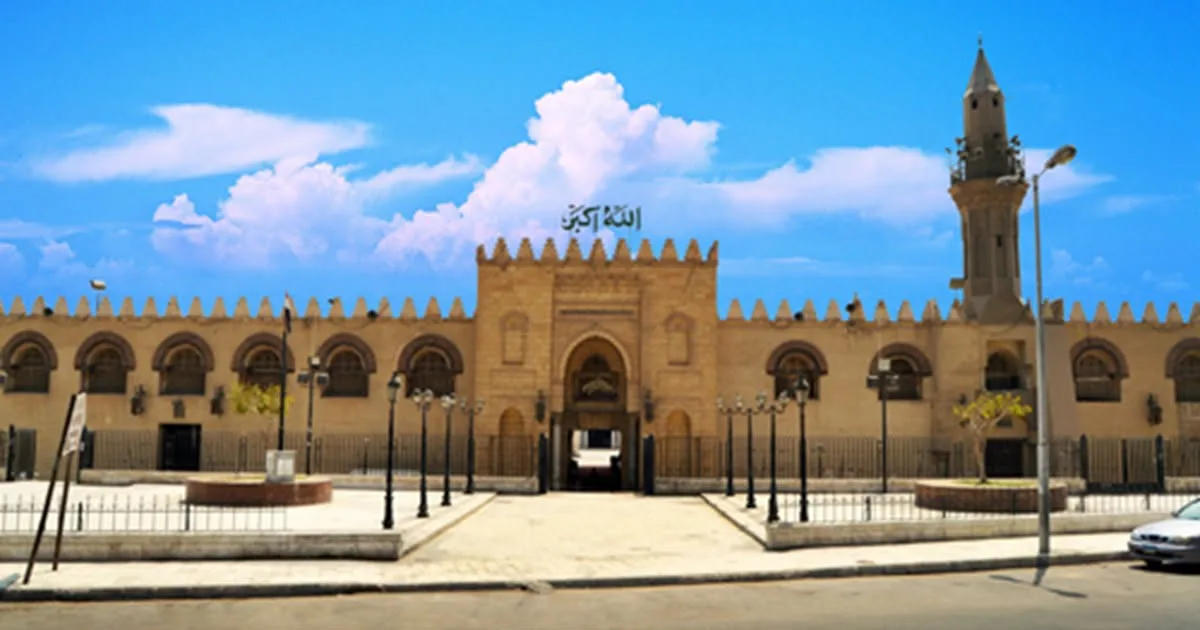
- The Mosque of Amr ibn al-As, the first mosque built in Africa (21 AH, 641–642 CE), rebuilt over the centuries on the same site
- The Citadel and the alabaster Mosque of Muhammad Ali
- If you wish, the mausoleum of Imam al-Shafi'i
Tip: We keep Ibn Tulun for late afternoon, when its courtyard is almost empty and the light is low. Religious Cairo & the Citadel, as a private day →
Prayer, halal food and dress
Prayer times shape the day rather than interrupt it. There are mosques near almost every major site and a prayer room at the Grand Egyptian Museum; in Islamic Cairo you pray in the mosques you are visiting. On a Friday the morning is kept light so you can pray Jumu'ah, and visits move to the afternoon.
Egypt is a Muslim-majority country, and meat in its restaurants and hotels is generally halal. There are no halal stickers, because halal is the norm. We check the exceptions in advance: international hotel restaurants that serve alcohol, foreign menus on Nile boats, and desserts made with alcohol-based flavourings.
In mosques, everyone covers shoulders and knees, and women cover their hair. Bring your own scarf, and socks, since shoes come off at the door.
A gentle pace, for families too
Umrah asks a great deal of body and mind, which is why Egypt works best after it: late starts, shorter days, an afternoon rest, and nothing that cannot be dropped. If your flights force the other order, we keep the Egypt days light, so you do not reach Makkah tired.
With children or older parents, the private vehicle waits where you need it and the day bends around rests. Tell us ages and any mobility needs. Groups travelling together from one Umrah operator are welcome: give us the exact number early, because it decides the vehicles and the guides.
How many days, and a rest by the sea
Three nights is the shortest stay that makes sense: Giza and the Grand Egyptian Museum one day, Islamic Cairo the next. Five gives Cairo at an easy pace, with Saqqara or a free afternoon. Six or seven lets you end with a rest — on the Red Sea, 22–23°C by day even in January, or in Alexandria, two and a half to three hours from Cairo by road — or add Luxor by a short domestic flight.
October to April suits sightseeing. From June to August Cairo reaches 34–37°C, so we start early and rest at noon. If your Umrah falls in Ramadan, Egypt's sites stay open, many with shorter afternoon hours, and we schedule nothing across the hour before iftar, the worst traffic of the day.
How a private journey works
Everything is private: your own licensed Egyptologist, in English, Arabic or any of our other guiding languages, your own vehicle and driver, and hotels chosen for the room rather than the star rating. Tell us your dates in and out of Saudi Arabia and how many of you are travelling; we reply within one working day with a real itinerary and a clear price, with no obligation.
If your Umrah dates are not fixed yet, we plan with provisional ones, and nothing is paid until they are. Our prices are set in euros, and you can pay by PayPal, card or bank transfer.
Frequently asked questions
Can I visit Egypt after Umrah?
Yes. Jeddah and Madinah are about two hours from Cairo by nonstop flight. Entry depends on your passport: British, American, Singaporean and Australian passport holders can use the e-visa or a visa on arrival; Nigerian passport holders need a visa from an Egyptian embassy in advance.
Does my Umrah visa let me into Egypt?
No. An Umrah visa is not a residence permit, so the visa on arrival many Gulf residents can use does not apply. Use the visa your own passport allows, and check the current fee on visa2egypt.gov.eg — it changed during 2026.
Is the food in Egypt halal?
Generally, yes: Egypt is a Muslim-majority country and meat in restaurants and hotels is normally halal. We check the exceptions in advance — hotel restaurants that serve alcohol, foreign menus on Nile boats, and desserts with alcohol-based flavourings.
How many days should we add?
Three to seven nights. Three covers Giza, the Grand Egyptian Museum and a full day in Islamic Cairo; five gives Cairo at an easy pace; seven adds a rest on the Red Sea or in Alexandria, or Luxor by a short flight.
Does Kemet organise the Umrah?
No. We arrange the Egypt part only: hotels, your Egyptologist, vehicle and driver, entrance tickets and domestic flights within Egypt. Your Umrah operator arranges the Umrah and the Saudi visa, and we fit our dates to theirs.
- Book a multi-city ticket: home to Jeddah or Madinah, then Cairo back home.
- If your passport allows it, apply for the e-visa before you leave home, on visa2egypt.gov.eg only.
- Nigerian passport holders: get your Egypt visa from an Egyptian embassy before you travel to Saudi Arabia.
- Pack a scarf and socks for mosque visits.
- Kemet arranges the Egypt part of your journey only. The Umrah and the Saudi visa are arranged by your Umrah operator.
- An Umrah visa is not a Gulf residence permit and does not qualify you for the residents' visa on arrival in Egypt.
- Your passport should be valid for at least six months beyond your stay in Egypt.
Related destinations
Places covered in this guide.
Cairo
Egypt's capital on the Nile — medieval Islamic and Coptic quarters, the Egyptian Museum, and the gateway to Giza.
Explore →Giza
Home of the Great Pyramid and the Sphinx, on the desert plateau across the Nile from Cairo.
Explore →Alexandria
Egypt's Mediterranean port founded by Alexander the Great — Greco-Roman ruins and the reborn Library.
Explore →Hurghada
Egypt's main Red Sea resort coast — warm, clear water over island reefs, and the easiest beach pairing with a Luxor or Nile itinerary.
Explore →Related tours

Religious Cairo & the Citadel
The Hanging Church, Ben Ezra Synagogue and Abu Serga in Old Cairo, then Saladin's Citadel and the alabaster Mosque of Muhammad Ali.
Giza & the Grand Museum
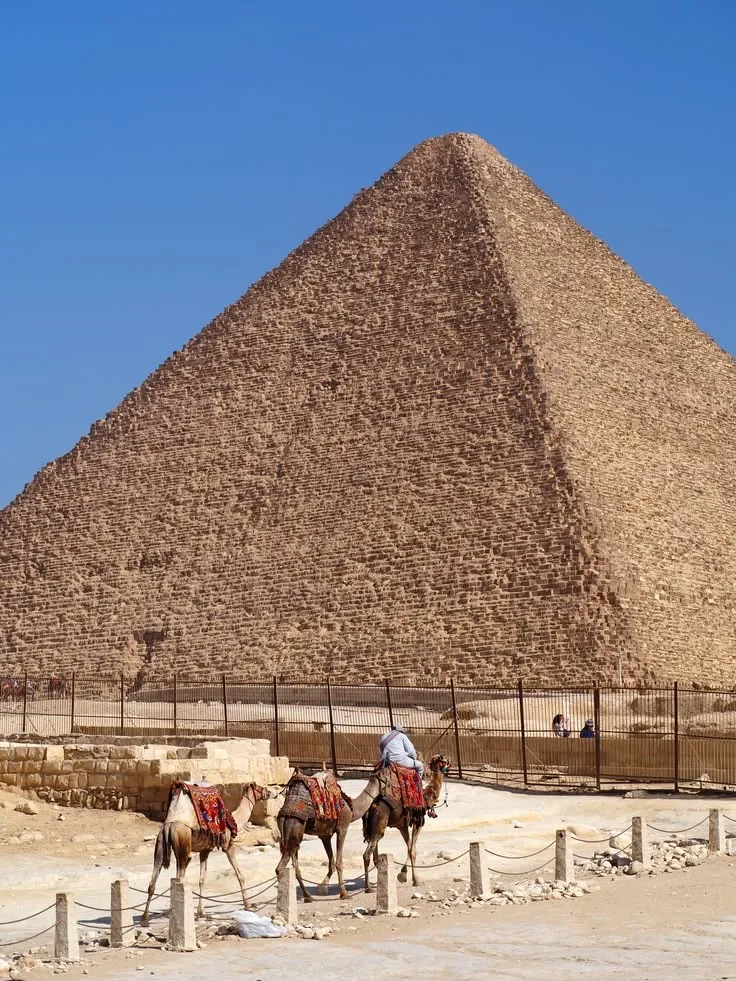
The Great Pyramid, the panorama of all three pyramids, the Valley Temple and Sphinx, then the vast new Grand Egyptian Museum beside them.
Cairo of the Eight Worlds
A deep, slow reading of the world's greatest layered city — its two museums, three faiths, medieval streets and the necropolis where the pyramid was invented.
Related guides
Egyptian Food Guide
A practical guide to Egyptian cuisine — the dishes to seek out, how Egyptians eat, where to find the best food, and what to expect for dietary requirements.
Egypt from Dubai, Abu Dhabi, Doha & Riyadh — for Gulf residents
For expatriates living in the Gulf: the short flights to Cairo, the visa on arrival many residence-permit holders can use, what fits in three, four or five days, and the seasons.
Egypt from South Africa, Nigeria, Kenya & Ghana
Planning Egypt from South Africa, Nigeria, Kenya or Ghana: EgyptAir's nonstop flights, the visa for each passport, the time difference, the holidays that work and family journeys.
Related experiences
Private activities at the destinations covered in this guide.
Sunrise at the Giza Pyramids
Be in place before sunrise at a quiet viewpoint where all nine pyramids of Giza stand in one line, with time of your own for sunrise yoga, a photo session or simply the view — then the plateau with a licensed Egyptologist before it opens to day visitors.
Old Cairo Walking Experience
Walk the medieval lanes of Islamic Cairo and the Coptic quarter with a historian guide who reads nearly two thousand years of layered city — from Roman fortifications to Ottoman merchant palaces.
Egyptian Cooking Experience
Learn to cook four dishes that trace Egypt's 7,000-year food history — from ancient grain preparations to Ottoman-era stuffed vegetables — in a private kitchen session led by a Cairo food specialist.
Book a travel consultation
A short conversation can save weeks of research. Speak to our team about destinations, timing, budgets and what to expect.