Dahabiya or cruise ship?
Eight cabins under sail against a hundred and forty with an engine.
If the budget allows and the dates are flexible, the dahabiya, without much hesitation. It is not a nicer version of the same thing — it is a different river. Eight to twelve cabins instead of a hundred and forty, moorings at villages the large ships cannot reach, and a boat that stops when you want to swim. The cruise ship is the right answer when dates are fixed, the party is large and unwilling to split, or the difference in cost matters more than the difference in experience.
Almost everyone booking their first Nile cruise is choosing between vessels that look, in photographs, broadly similar. They are not. The distinction that matters is not the star rating or the pool — it is the number of people on board and whether the boat has sails.
| Dahabiya | Cruise ship | |
|---|---|---|
| Cabins | Typically 8–12 | Typically 60–140 |
| Propulsion | Sail, with a tug for still air | Engine |
| Where it moors | Sandbanks, islands and villages with no dock | Established quays in the main towns |
| Pace | Set by wind and by you — it can stop | Fixed schedule shared with every other vessel |
| Sound | Water and wind | Engine, and the boat moored alongside you |
| Dining | One sitting, everyone together, often on deck | Buffet, multiple sittings, indoor dining room |
| Entertainment | None, deliberately | Nightly programme, sometimes unavoidable |
| Cost | Substantially higher per night | The standard market rate |
| Availability | Very limited — few boats, booked far ahead | Wide, most weeks of the year |
| Whole-boat charter | Realistic for a party of 10–20 | Possible but rarely worth it |
Choose a dahabiya if
- This trip is marking something — a honeymoon, an anniversary, a milestone
- Quiet is the point, and a nightly entertainment programme would spoil it
- You are a party of eight or more and could take the whole boat
- You can book six months out and are not tied to a fixed week
Choose a cruise ship if
- Your dates are fixed and fall in a busy month
- The party is large, mixed in age, and wants a pool and options
- The cost difference would come out of something you would rather keep
- It is a first visit and the priority is seeing the temples, not the boat
What the mooring difference actually buys
A large cruise vessel needs a quay, and there are a limited number of them — which is why boats raft up three and four deep at Edfu and you walk through someone else's lobby to reach the shore. A dahabiya draws less water and moors almost anywhere: a sandbank, an island, a village with a path up the bank. That is the difference between an evening looking at another boat's windows and an evening looking at the Nile.
The trade you are making is availability
There are a few dozen dahabiyas working the Nile against several hundred cruise vessels. They are small, they book early, and over Christmas, New Year and Easter they are gone the previous spring. If your dates cannot move, the honest answer is often that the choice is not available to you — and a good cruise ship well chosen is a genuinely fine experience.
Not every small boat is a dahabiya
The word has become a marketing term and is applied to vessels that are simply small motor cruisers. A real dahabiya has masts and sails and works with the wind. If this matters to you — and it should, because it is the whole point — ask for the boat by name before booking. We name the vessel in every quote for exactly this reason.
Dahabiya or ship — questions
What is a dahabiya?
A traditional Nile sailing boat with two masts, typically eight to twelve cabins, working the river the way boats did before engines. It moors at sandbanks and villages the large vessels cannot reach, carries a tenth of the passengers and has no entertainment programme. It costs substantially more per night than a standard cruise ship.
Is a dahabiya worth the extra cost?
For a journey that is marking something — a honeymoon, an anniversary, a milestone birthday — it is the single upgrade we recommend before any other. For a first visit where the priority is seeing the temples and the budget is better spent elsewhere, a well-chosen cruise ship does the job properly.
How many people does a dahabiya hold?
Usually sixteen to twenty-four passengers across eight to twelve cabins. That size also makes whole-boat charter realistic for a private group — a family or a set of friends of ten or more can take the vessel entirely, which is the best version of Nile travel available.
How far in advance should I book a dahabiya?
Six months for most of the season, and up to a year for Christmas, New Year and Easter. There are only a few dozen genuine dahabiyas on the river and they are taken early — this is the booking that constrains the rest of the itinerary, so it is the one we settle first.
Other decisions
Nile cruise or land tour?
Between Luxor and Aswan, the boat wins — and the reason is not the boat.
Luxor or Aswan?
One is the greatest concentration of monuments on earth. The other is where you breathe.
Egyptian Museum or the Grand Egyptian Museum?
One is the new wonder. The other is the hundred-year-old attic, and it is not the lesser one.
Sharm el-Sheikh or Hurghada?
Better reefs on one side, better access to everything else on the other.
Either way, privately
Led by a licensed Egyptologist, with no shared coaches and no fixed departures. Tell us which way you are leaning and we will build the itinerary around it.

The Grand Tour of Egypt
Our most complete journey: two capitals, a Nile cruise, Ramesses II's mountain temple at Abu Simbel, and four Red Sea days to absorb it all.
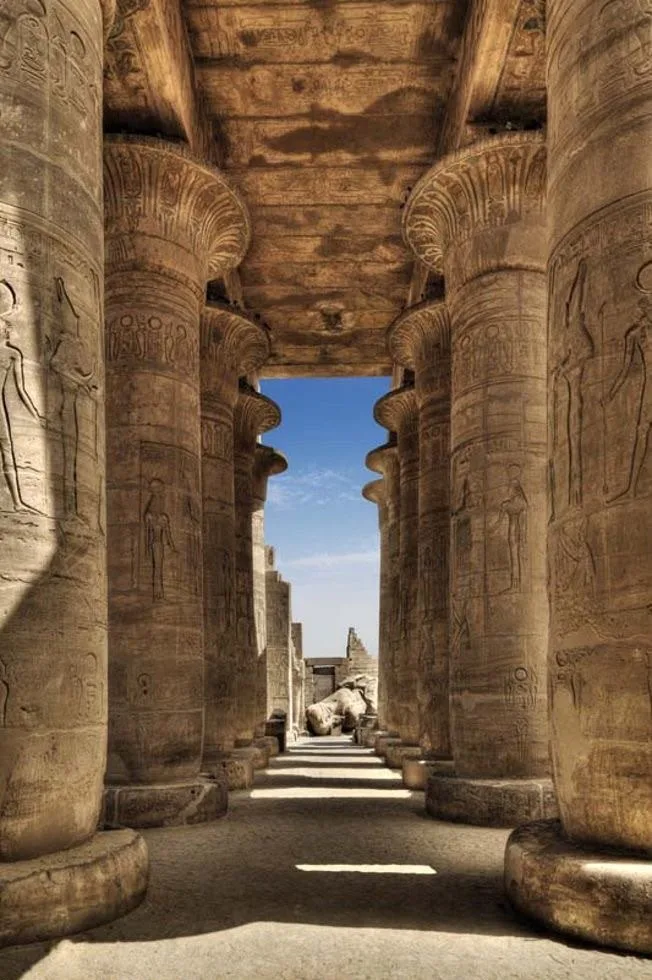
Egypt Icons & Nile Cruise
Our most complete journey: Cairo, Alexandria, a sleeper train south, and a three-night Nile cruise from Aswan to Luxor — every layer of Egypt in one arc.
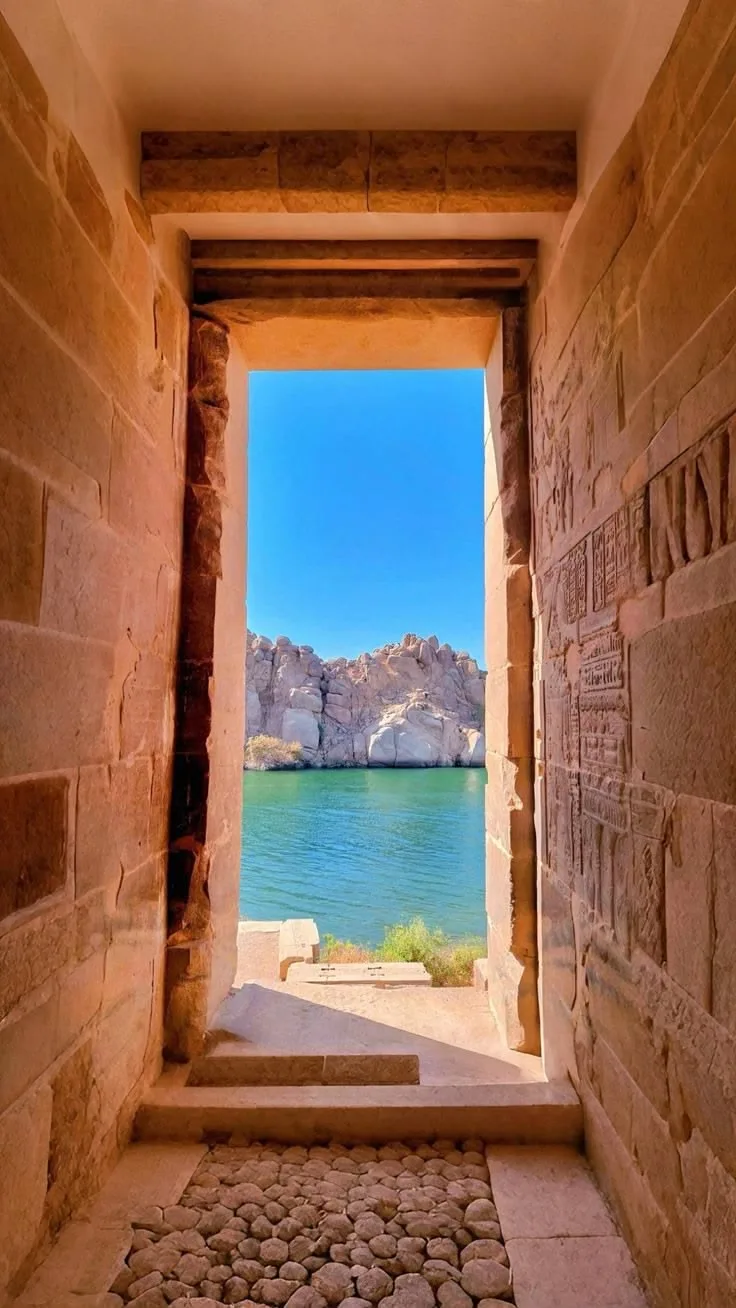
Honeymoon on the Nile
Egypt as a honeymoon should be — private sunrise at the pyramids, a felucca at golden hour, three nights on the Nile and suites chosen for the view.
Still deciding?
Tell us your dates, your party and what you want out of the trip. We will tell you which way we would go and why — including when the answer is the cheaper one.